en
en
 fr
fr es
es
1. Andalusian terroir and geography
1.1. Andalusia, a unique territory
When Spanish olive oil is mentioned, Andalusia is often the first region that comes to mind. Located in the far south of the Iberian Peninsula, this vast autonomous region covers nearly 87,600 km², an area comparable to that of Portugal. It comprises eight provinces: Almería, Cádiz, Córdoba, Granada, Huelva, Jaén, Málaga and Seville.
Alongside the ham and cured meat sector, Andalusia possesses a true treasure in its countryside: it contains the largest olive-growing area in Spain and is now the world's leading olive oil producing region.
The olive tree has been part of the Andalusian landscape for more than two millennia. Introduced and developed during Antiquity, notably under the influence of the Phoenicians and later the Romans, it has gradually shaped the economy, culture and even the visual identity of the region.
Even today, some inland areas of Andalusia offer an impressive spectacle: hills covered with olive trees as far as the eye can see, forming what Spaniards call the famous "Mar de Olivos", the Sea of Olive Trees. The photo below illustrates this remarkable landscape.
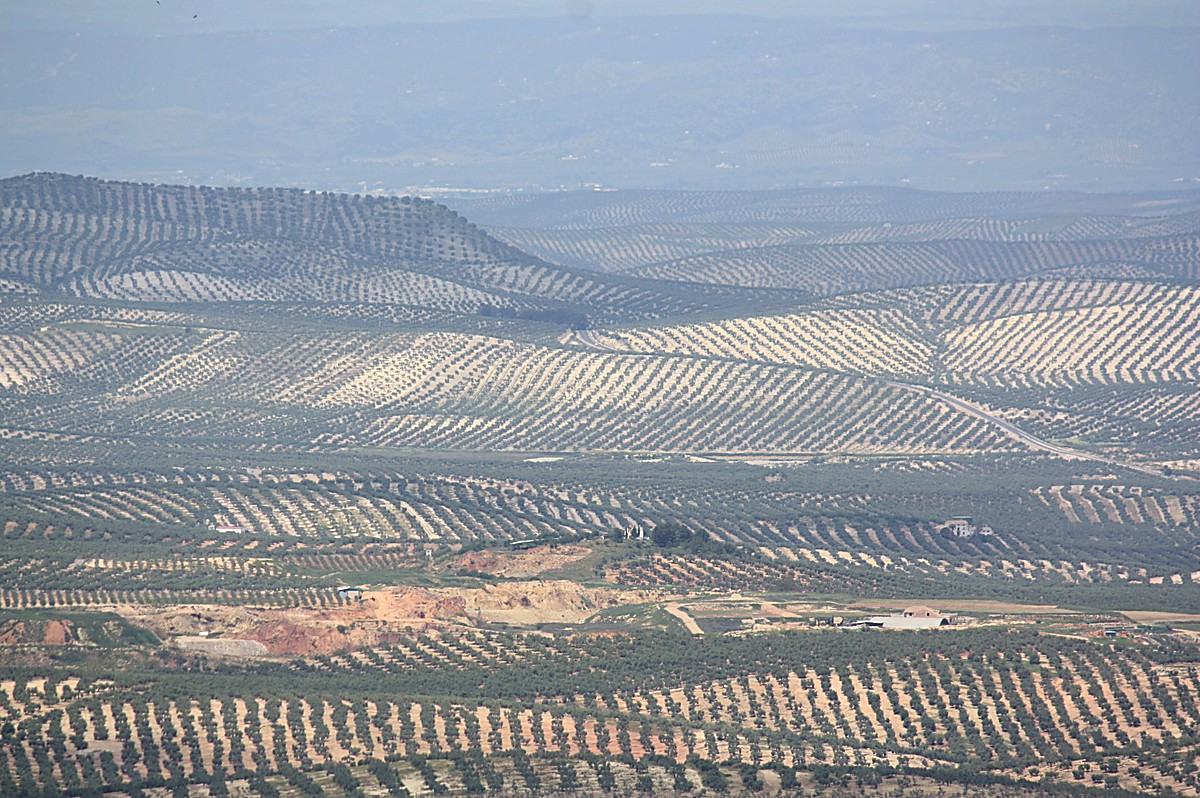 Sea of olive trees between the Cazorla and Mágina mountain ranges
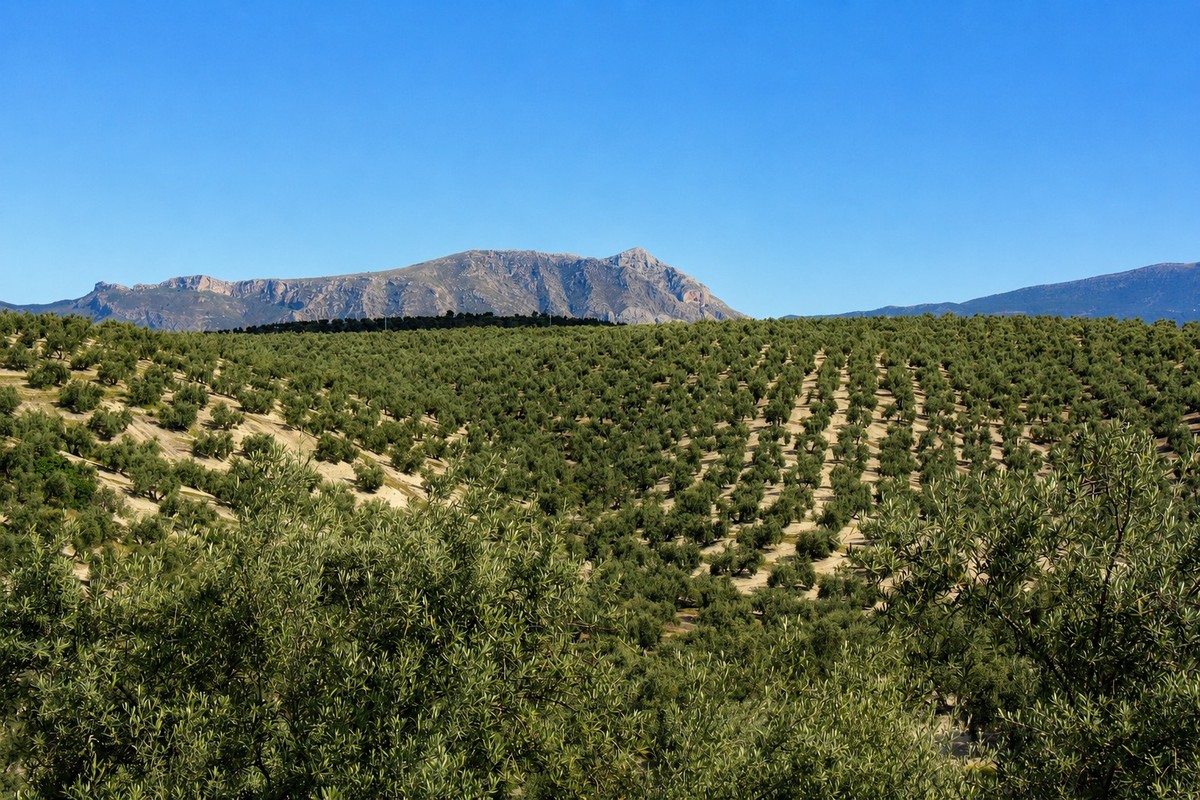 Sea of olive trees in the Province of Jaén
1.2. A Mediterranean climate ideal for olive trees
If Andalusia has become the global heart of olive cultivation, it is above all thanks to exceptionally favorable natural conditions.
The olive tree is a resilient species capable of withstanding drought and thriving in poor soils. It appreciates hot, dry summers, relatively mild winters and rainfall concentrated outside the summer period. These characteristics are found throughout much of Andalusia.
According to data from the Agencia Estatal de Meteorología (AEMET), certain inland areas of Andalusia benefit from more than 2,800 hours of sunshine per year, among the highest levels in Western Europe.
Rainfall is generally concentrated between autumn and spring, while summer is marked by almost total drought. This natural water stress contributes to the concentration of aromas and phenolic compounds within the olives.
The mountainous terrain also plays an important role. Olive groves located at higher altitudes, particularly in the mountain ranges of Jaén and Granada (Sierra Nevada), experience greater temperature differences between day and night. This slower ripening process often promotes greater aromatic complexity in the resulting oils.
1.2.1. Favorable conditions for olive cultivation in Andalusia
| Factor | Impact on olive trees |
|---|---|
| Hot, dry summers | Limit diseases and promote ripening |
| Mild winters | Protect trees from prolonged frost |
| High levels of sunshine | Promote photosynthesis |
| Well-drained limestone soils | Well suited to the olive tree's root system |
| Altitude of certain mountain ranges | Enhances aromatic richness |
1.3. The major Andalusian olive-growing terroirs
Although the olive tree is present throughout the region, certain provinces stand out because of their history, landscapes or traditional varieties.
1.3.1. Jaén: the world capital of olive oil
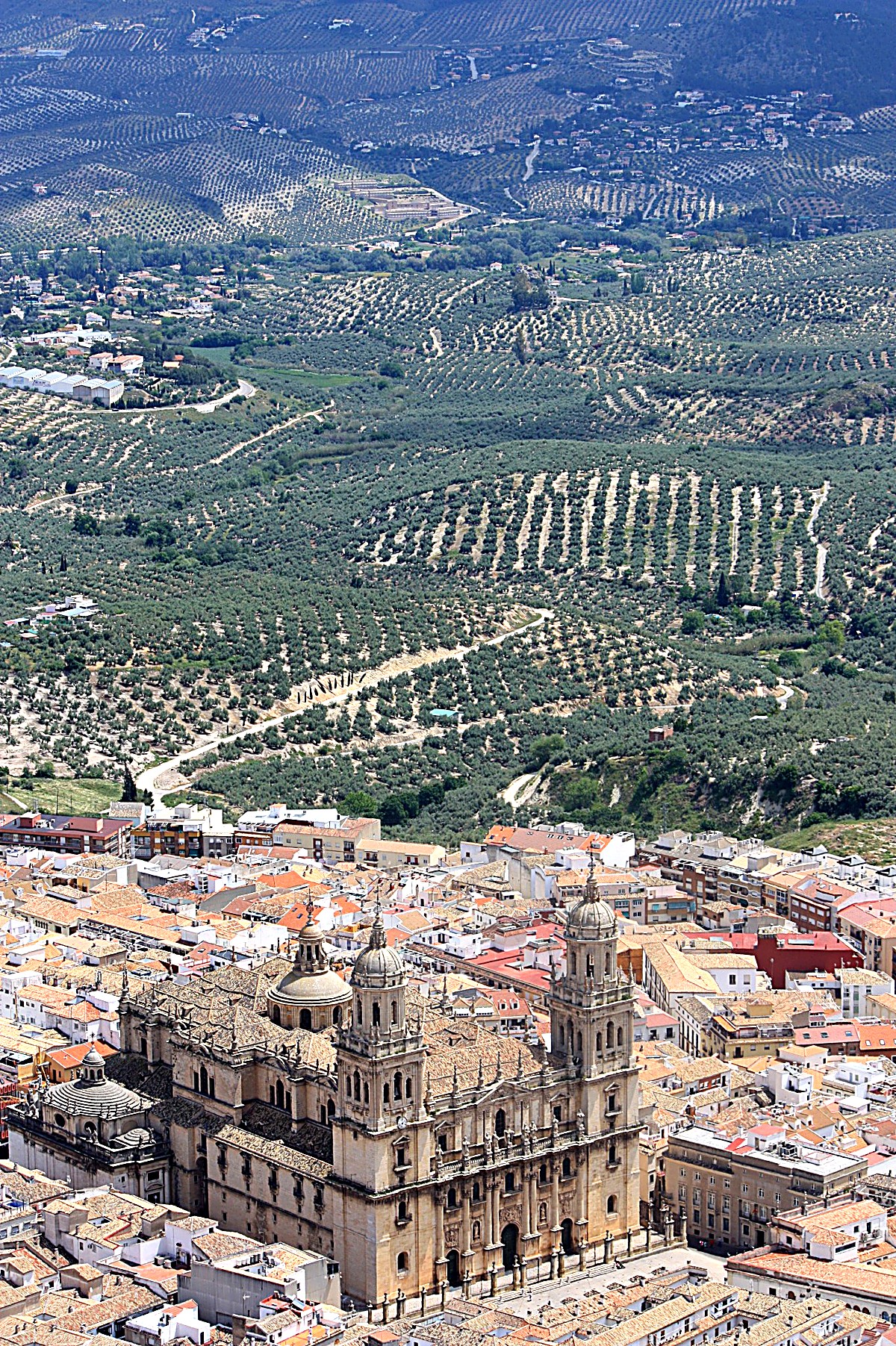
Jaén and its cathedral seen from the castle
No other province in the world is as closely linked to the olive tree as Jaén. With approximately 550,000 to 600,000 hectares of olive groves, it alone accounts for nearly one-third of Andalusia's olive-growing area.
The province is dominated by the Picual variety, renowned for producing powerful, vegetal oils that are particularly rich in polyphenols.
The landscapes are spectacular: millions of trees cover hills and valleys as far as the eye can see, creating the famous Mar de Olivos.
1.3.2. Córdoba: between tradition and diversity
The province of Córdoba occupies a special place in the history of olive oil. During Roman times, it belonged to the province of Baetica, one of the main olive oil exporting regions supplying Rome.
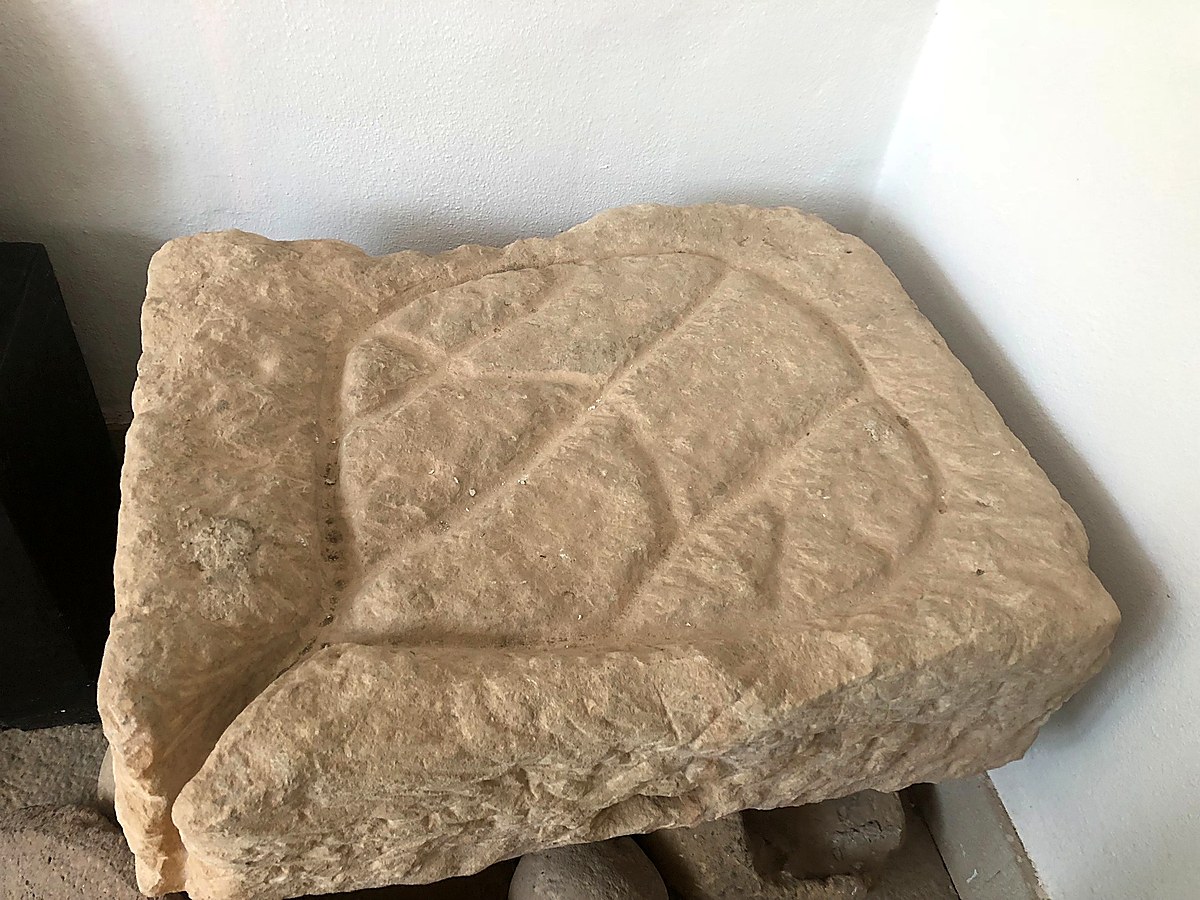 Ancient olive oil millstone - Baeza
Even today, Córdoba stands out for its remarkable varietal diversity. Olive oils from the region are often produced from several emblematic varieties such as Picudo or Carrasqueño de Córdoba, Lechín, Chorrúo or Jardúo, Pajarero, Hojiblanco and Picual, creating particularly complex aromatic profiles.
It is also home to the prestigious PDO Baena, one of the oldest protected designations of origin in Spain. As early as the 12th century, olive trees and cereals already dominated the agricultural landscapes of the Baena district. However, the history of olive oil in this region is even older. Archaeological excavations conducted at the Torreparedones site, between Baena and Castro del Río, have revealed evidence of a thriving olive oil industry as early as the 1st century AD, based on the large-scale production and trade of olive oil.
1.3.3. Granada, Málaga and Seville: complementary identities
The other Andalusian provinces also contribute to the richness of the region's olive-growing heritage.
In Granada, mountain olive groves produce oils marked by altitude and climatic contrasts.
In Málaga, the Hojiblanca variety plays an important role and gives rise to oils that are often softer and more elegant.
In Seville, large agricultural estates and proximity to major transport infrastructures have greatly contributed to the historical development of the olive oil trade.
1.3.4. Table of the main Andalusian olive-growing terroirs
| Province | Main characteristic | Dominant varieties |
|---|---|---|
| Jaén | World's leading producing province | Picual |
| Córdoba | Roman heritage, varietal diversity | Picuda, Hojiblanca, Picual |
| Granada | Mountain olive groves | Picual, Lucio |
| Málaga | Softer and more balanced oils | Hojiblanca |
| Seville | Large estates and export activity | Hojiblanca, Manzanilla |
2. Olive trees, varieties and production
2.1. Andalusia, the world's largest olive-growing region – key figures
2.1.1 Olive-growing area: 2024/2025 season
Andalusia has 1,665,063 hectares of olive groves, of which approximately 66,305 hectares (4%) are primarily dedicated to the production of table olives.
Production (Source: Junta de Andalucía)
The 2024/2025 season reached:
- 6.22 million tonnes of olives destined for olive oil production (compared with 5.69 million tonnes forecast for 2025/2026);
- 1,143,000 tonnes of olive oil (compared with 1,080,900 tonnes forecast for 2025/2026);
- 481,346 tonnes of table olives.
These volumes are considerable and confirm Andalusia's central role in global olive cultivation. However, it should be remembered that only part of this production reaches the highest quality category: extra virgin olive oil (EVOO), the category selected by TAPAS Shop for its exceptional taste and nutritional qualities.
| Indicator | Value |
|---|---|
| Andalusian olive-growing area | 1,665,100 ha |
| Spanish olive-growing area | 2,854,788 ha |
| Andalusia's share of Spain | 58.3% |
| Olive oil production 2025/26 (forecast) | 1,080,900 t |
| Share of Spanish production | 75.3% |
Economic value
The total value of Andalusian olive production reached €5.402 billion in 2024, of which €442 million (8.2%) came from table olives.
Geographical distribution of olive groves
Olive groves dedicated to olive oil production are mainly concentrated in three provinces (2024 data):
| Province | Share of Andalusia's olive-growing area |
|---|---|
| Jaén | 46% |
| Córdoba | 21% |
| Granada | 16% |
Table olive cultivation is largely dominated by the province of Seville, which alone accounts for 83% of the Andalusian area dedicated to this production.
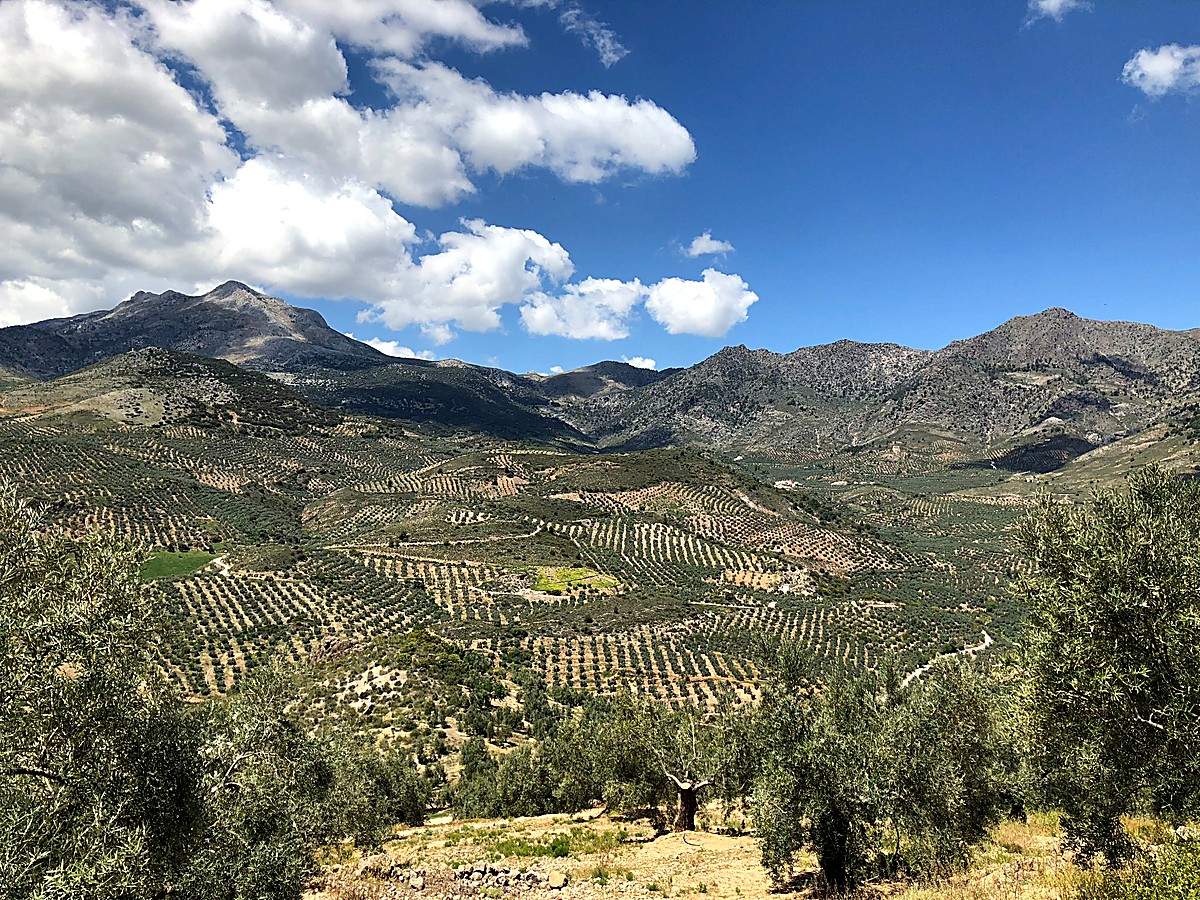 Landscape of Sierra Mágina
2.2 Andalusian olive varieties
If Andalusia produces three quarters of Spain's olive oil, it is also thanks to an extraordinary varietal diversity. More than 260 olive varieties have been identified in Spain, several of which originate from Andalusia and continue to shape the identity of the region's major olive-growing terroirs.
2.2.1. Picual, the queen of Andalusian olive groves
Key figures
- approximately 900,000 hectares in Spain
- around 50% of Spain's olive-growing area
- dominant variety in the province of Jaén
Sensory profile of the oil
- green tomato
- olive leaf
- artichoke
- fresh grass
- slight bitterness
- pronounced pungency
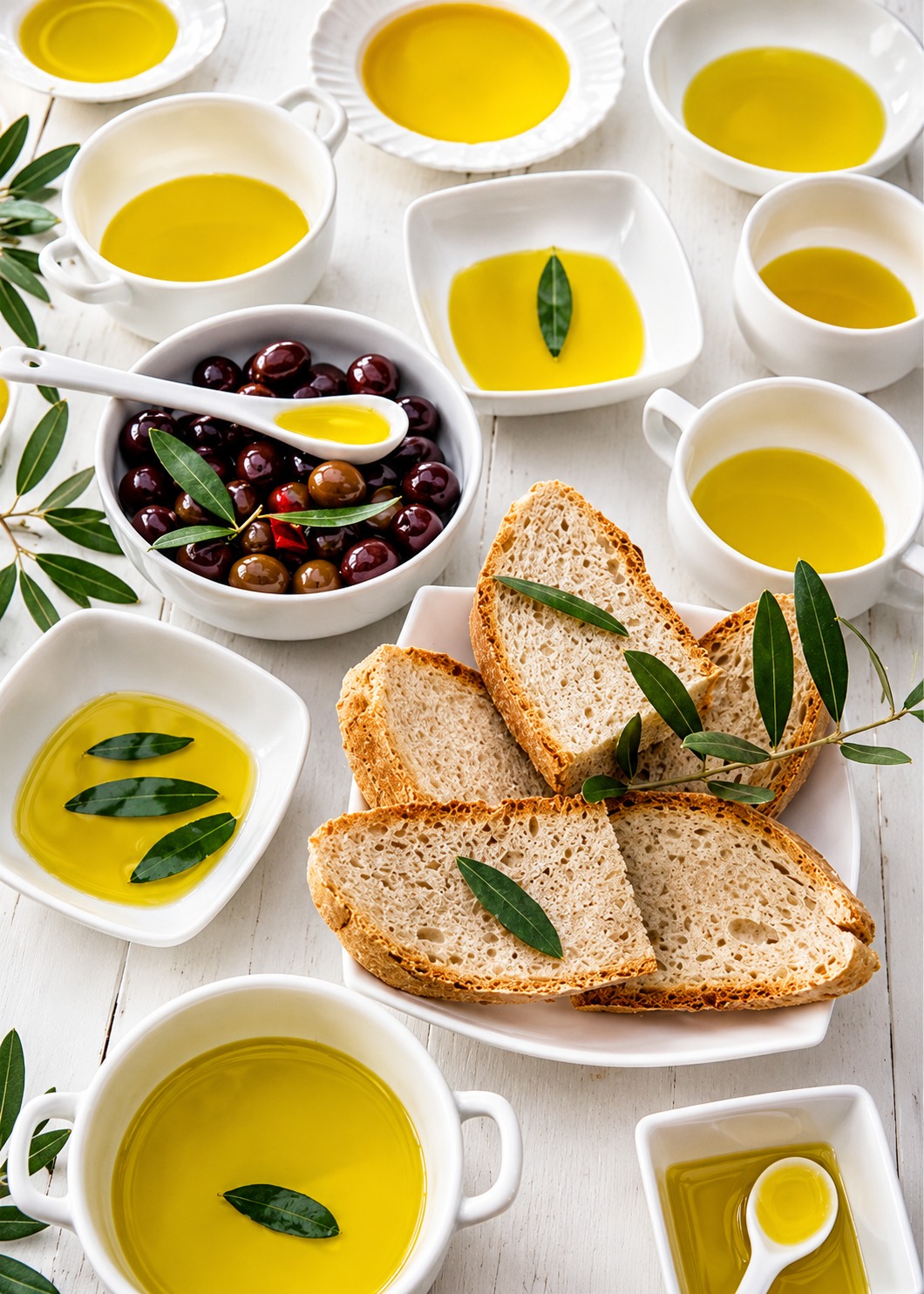 Tasting Andalusian olive oils
What makes Picual unique
The Picual variety has the highest oleic acid content among Spain's major olive varieties. It is also renowned for its high polyphenol content, which contributes to the oil's stability over time.
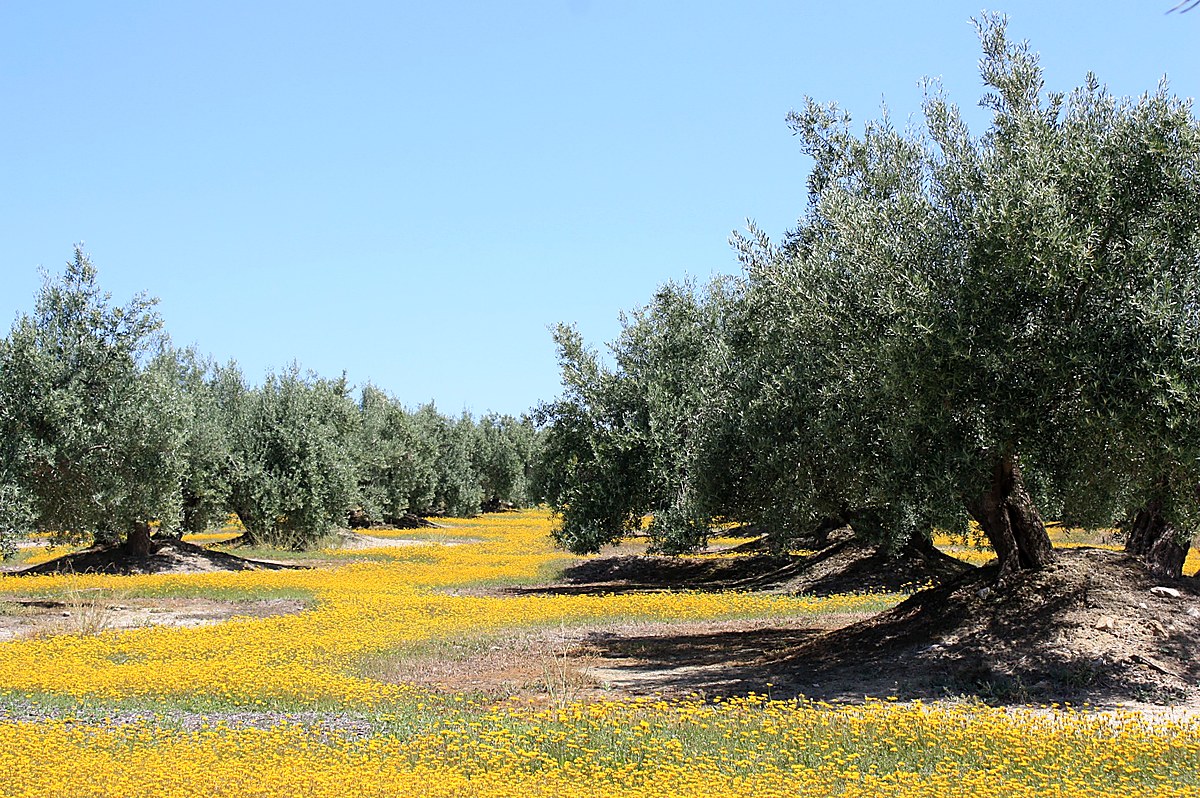 Olive grove belonging to one of our producers - Haza La Centenosa
2.2.2. Hojiblanca, Andalusian balance
Key figures
- approximately 265,000 hectares
- around 16% of Spain's olive-growing area
Growing areas
- Córdoba
- Málaga
- Seville
Sensory profile
- fresh grass
- green almond
- green apple
- floral notes
Hojiblanca generally produces milder oils than Picual, with a more moderate pungency.
2.2.3. Picudo, the jewel of Córdoba
Key figures
- approximately 90,000 hectares
- between 3% and 5% of Spain's olive-growing area depending on the source
Sensory profile of Picudo
- apple
- sweet almond
- ripe fruit
- sometimes banana
Picuda (or Carrasqueño de Córdoba) is particularly appreciated in the traditional blends of the province of Córdoba.
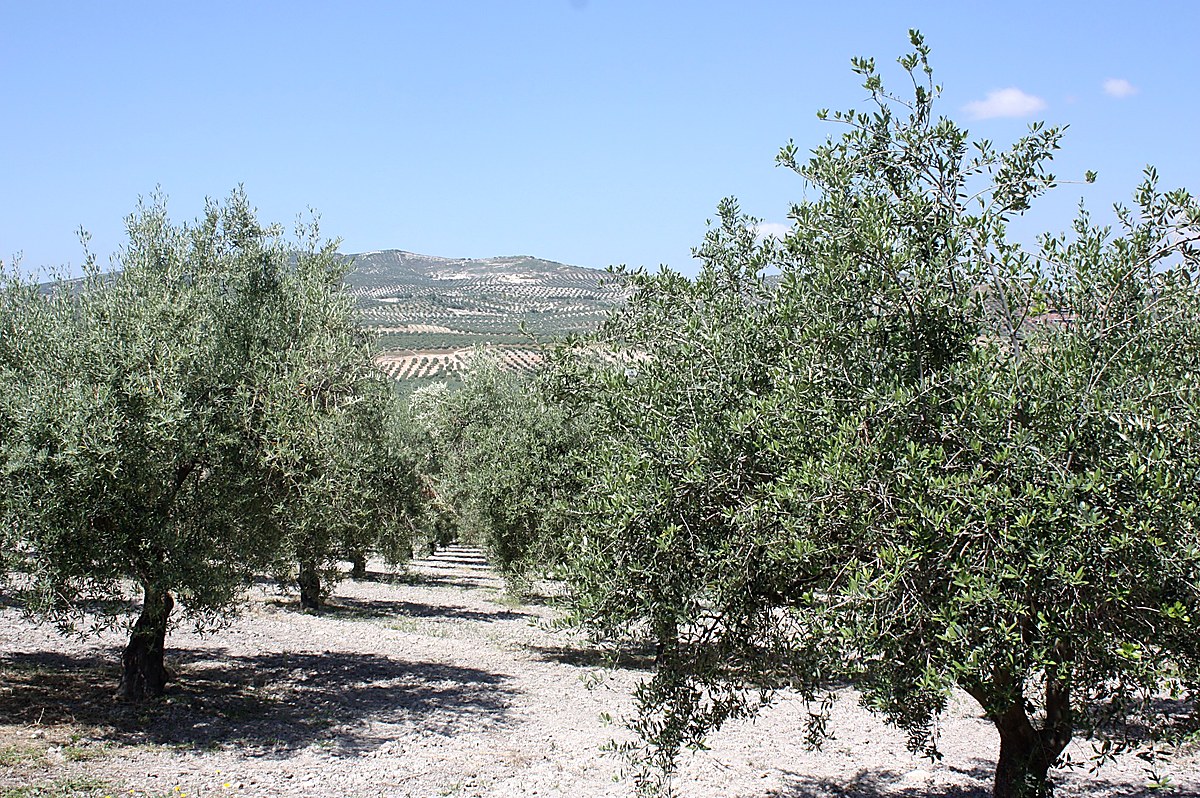 Olive grove belonging to one of our producers - Cortijo Suerte Alta
2.2.4. Other emblematic Andalusian varieties
While Picual, Hojiblanca and Picuda dominate the terroirs of Jaén and Córdoba, Andalusia is also home to numerous local varieties that contribute to the richness of its olive-growing heritage. Some have been cultivated for centuries and continue to be used in artisanal productions or within specific protected designations of origin.
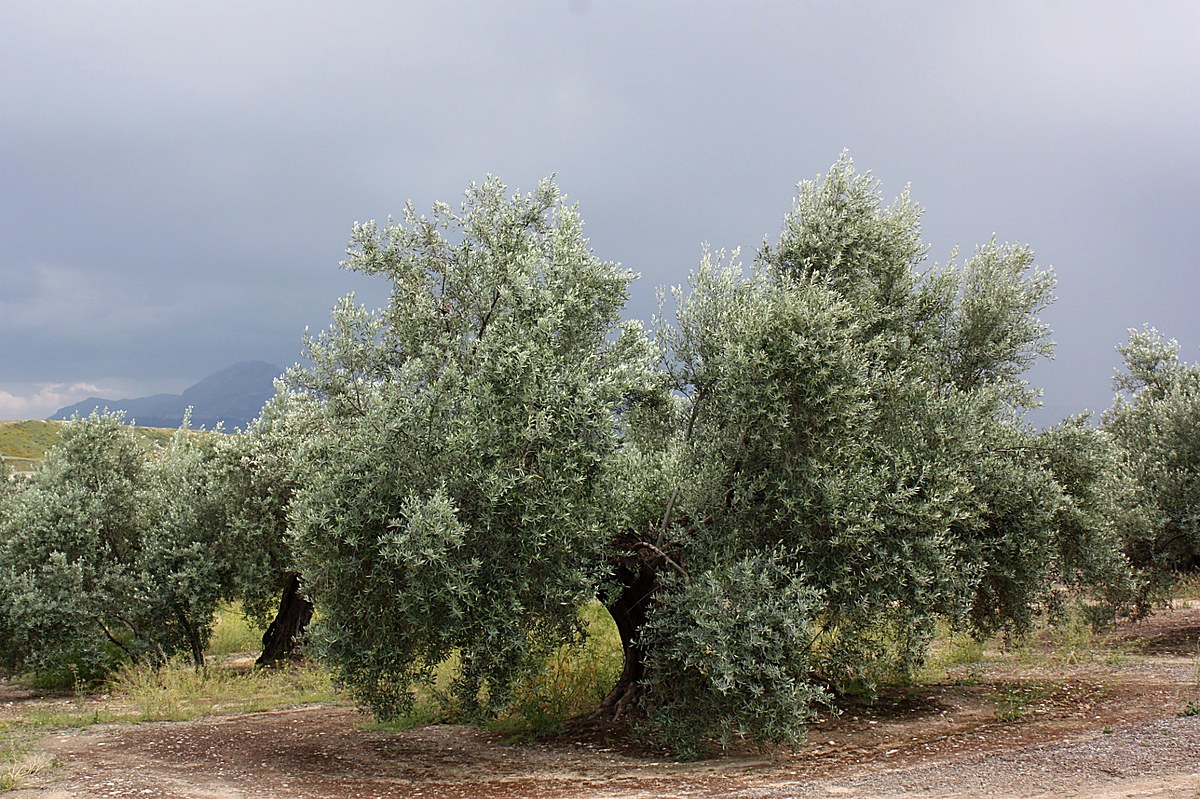 Organic olive grove near Baeza
Arbequina: the softness that came from Catalonia
Originally from Catalonia, Arbequina has gradually spread throughout many Spanish regions, including Andalusia. Its success is based on its productivity and the particularly accessible aromatic profile of its oils.
Arbequina oils are generally:
- mild and low in bitterness;
- very fruity;
- characterized by notes of apple, ripe banana and sometimes fresh almond.
Less rich in polyphenols than Picual oils, they are often appreciated by consumers discovering extra virgin olive oil for the first time.
Lechín de Sevilla: a historic variety of western Andalusia
Lechín is one of the oldest Andalusian olive varieties. Its name comes from the pale color of the olive flesh, reminiscent of milk ("leche" in Spanish).
Mainly cultivated in the provinces of Seville, Cádiz and Huelva, it is particularly well adapted to the sometimes challenging climatic conditions of western Andalusia.
Oils produced from Lechín generally display:
- moderate bitterness;
- pronounced vegetal notes;
- good structure on the palate;
- excellent resistance to oxidation.
Traditionally, it is often blended with other varieties in order to bring complexity and stability to olive oils.
Chorrúo or Jardúo: a confidential variety from the Sierra de Cádiz
Chorrúo, also known as Jardúo depending on the growing area, is one of Andalusia's rarest native varieties.
It is mainly found in certain mountainous areas of the provinces of Cádiz and Málaga. Long threatened by the expansion of more productive varieties, it is now attracting renewed interest through programs dedicated to preserving Andalusia's agricultural heritage.
Its oils are characterized by:
- an intense green fruitiness;
- fresh grass notes;
- a subtle spicy touch;
- a highly distinctive aromatic personality.
However, this variety remains marginal on the scale of Andalusian production.
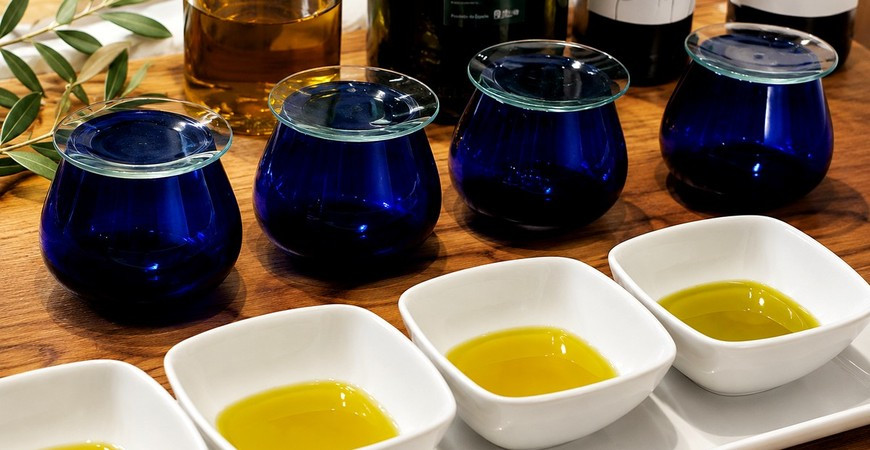
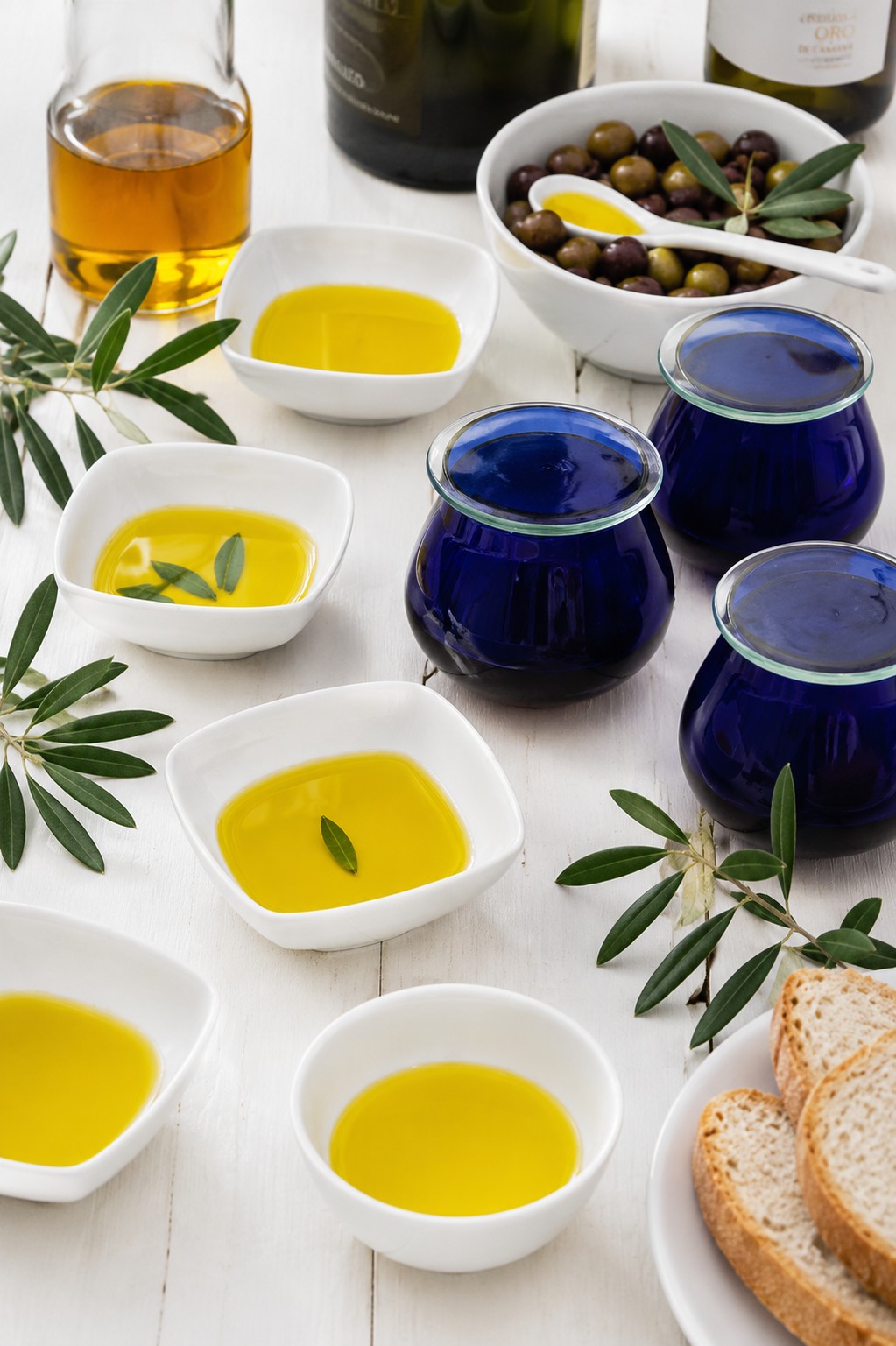 Premium olive oil tasting
Pajarero: the hidden treasure of the Sierra de Grazalema
The Pajarero variety is mainly cultivated in the mountains of the Sierra de Grazalema and in certain areas of the Sierra de Cádiz.
Particularly suited to rugged terrain, it produces oils renowned for their aromatic elegance.
They often reveal:
- green apple notes;
- aromas of aromatic herbs;
- a delicate touch of almond;
- remarkable freshness on the palate.
Although still relatively confidential, Pajarero is now considered one of the most promising local varieties for the production of distinctive extra virgin olive oils.
Verdial de Málaga: Mediterranean fruitiness
Verdial is one of the most representative olive varieties of the province of Málaga.
Its name comes from the green color ("verde") that its fruit retains for a long time during ripening.
It produces oils particularly appreciated for their softness and aromatic intensity:
- low bitterness;
- moderate pungency;
- ripe fruit notes;
- sweet almond;
- sometimes hints of tropical fruits.
Verdial is often cited among the Spanish varieties that produce the fruitiest oils. It is one of the signature flavors of olive cultivation in Málaga.
2.2.5. An exceptional varietal heritage
According to data from the World Olive Germplasm Bank of Córdoba, Spain has more than 260 identified olive varieties. Andalusia concentrates a significant share of this genetic diversity, inherited from centuries of adaptation to the region's different climates, landscapes and terroirs.
This richness explains the wide variety of aromatic profiles found today in Andalusian olive oils, from the powerful Picual oils of Jaén to the delicate Verdial oils of Málaga and the complex blends produced in the Baena region.
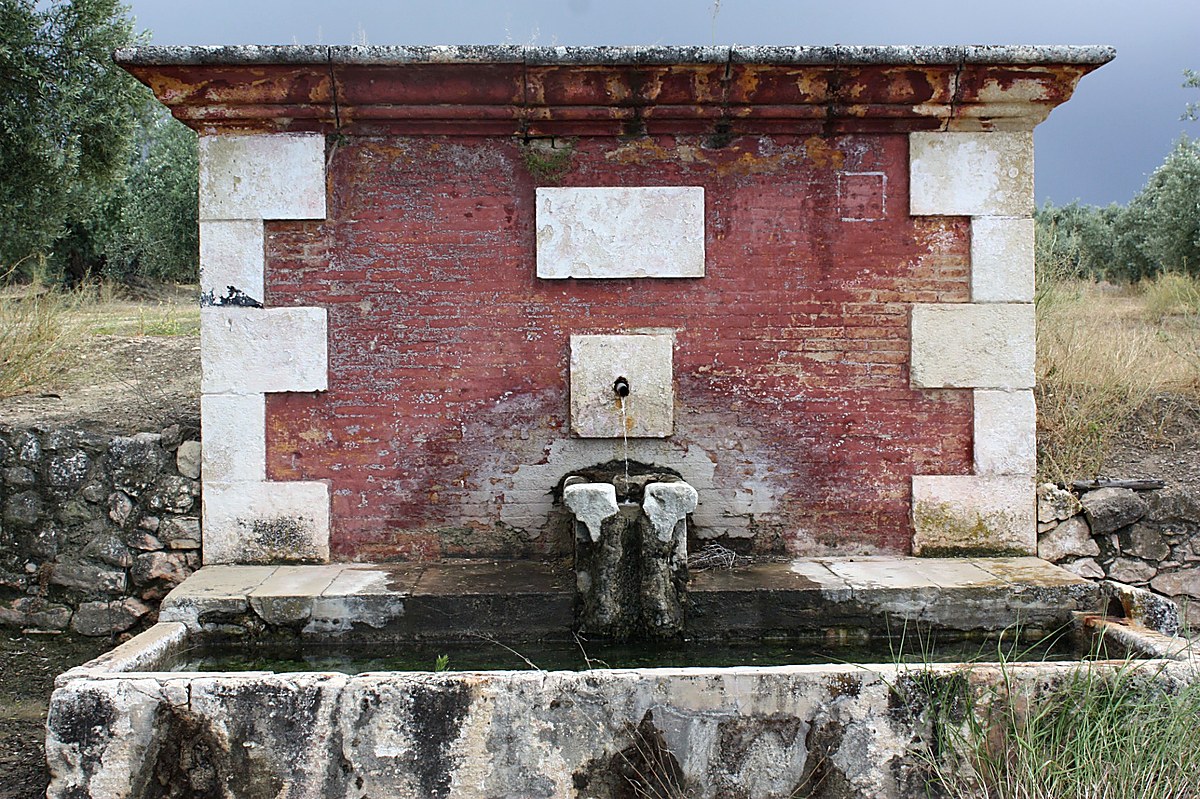 Fountain - irrigation of olive groves
2.3. Quality evolution and organic olive oil
Long associated with mass production, Andalusian olive cultivation has undergone profound changes since the 1990s. Earlier harvesting, cold extraction, plot selection and the development of protected designations of origin have enabled the emergence of extra virgin olive oils among the most highly awarded in the world. This pursuit of excellence is now reflected in the oils selected by TAPAS Shop, sourced from the emblematic terroirs of Jaén and Córdoba.
2.3.1. The rise of organic farming
Andalusia has also become one of the European leaders in organic olive cultivation.
In 2023, certified organic olive groves represented:
- 134,782 hectares;
- or 8.6% of the total olive-growing area dedicated to olive oil production.
For the 2024/2025 season, production of organic olive oil is estimated at 29,230 tonnes, representing an increase of 48.8% compared with the 2023/2024 season.
3. Olive oils selected by TAPAS Shop
After exploring the Andalusian landscapes, discovering the main olive varieties and understanding the importance of this region in global olive oil production, it is time to experience these terroirs in the glass.
At TAPAS Shop, our selection focuses on two of Andalusia's greatest olive-growing territories: the province of Jaén, birthplace of the Picual variety, and the province of Córdoba, renowned for the richness of its traditional blends.
This selection allows you to discover different expressions of Andalusian extra virgin olive oil, from powerful and vegetal mountain oils to softer and fruitier oils from the Córdoba countryside.
 Olive millstone - Museum of Olive Culture
3.1. Haza La Centenosa: in the Sierra Mágina
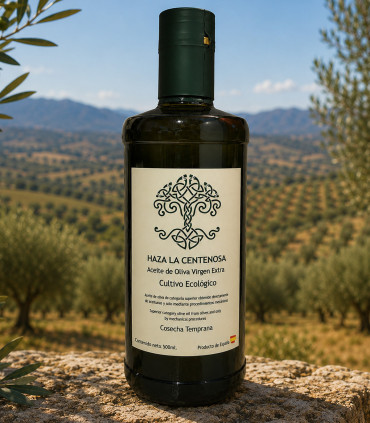
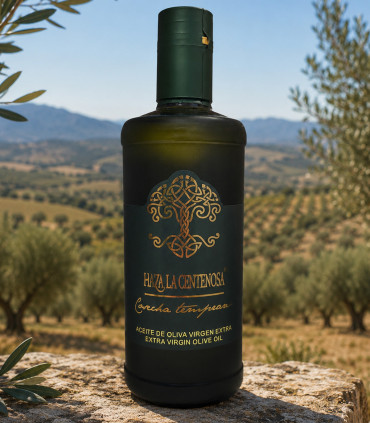
In the heart of the Sierra Mágina Natural Park, in the province of Jaén, the olive groves benefit from an exceptional environment. Located at altitude, they enjoy significant temperature differences between day and night, encouraging slow olive ripening and outstanding aromatic richness.
Haza La Centenosa olive oils are produced exclusively from the Picual variety, the true emblem of Jaén.
Their aromatic profile is generally characterized by:
- green tomato notes;
- olive leaf;
- artichoke;
- balanced bitterness;
- a high concentration of polyphenols.
This typicity perfectly reflects the character of oils produced within the Sierra Mágina PDO, recognized since 1995 and covering approximately 60,000 hectares of olive groves.
3.1.1. Olive oils to discover
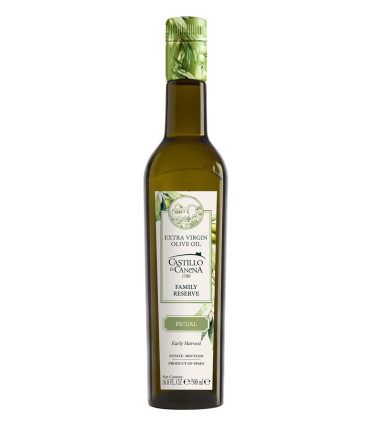
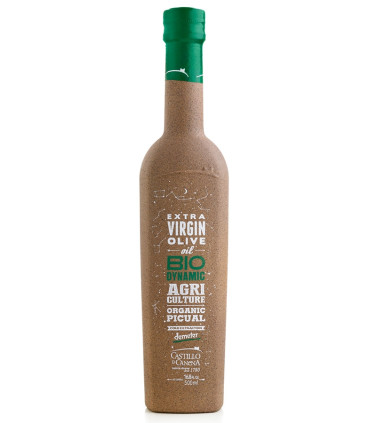
3.2. Castillo de Canena: the excellence of Jaén
Located in the Upper Guadalquivir Valley, between the Cazorla and Mágina mountain ranges, the family estate of Castillo de Canena has been closely linked to olive cultivation for generations. The village of Canena lies near two magnificent Spanish cities: Úbeda and Baeza.
As the producer itself states:
“En el Valle del Alto Guadalquivir, entre las Sierras de Cazorla y Mágina, está la tierra en la que se encuentran estos olivos familiares...”
Today, the estate is recognized as one of the benchmarks for premium extra virgin olive oil in Spain and internationally.
The oils offered by Castillo de Canena provide an opportunity to compare several varieties and production styles.
Depending on the range, you will find in particular:
3.2.1. Picual
- intense vegetal notes;
- green tomato;
- fresh grass;
- excellent stability.
3.2.2. Arbequina
- a milder oil;
- apple and banana aromas;
- a silky texture.
The appeal of Castillo de Canena also lies in its work with early harvests and the enhancement of different olive varieties.
3.2.3. Olive oils to discover
3.3. Cortijo Suerte Alta: one of the pioneers of organic olive oil in Andalusia
Located in the heart of the Baena PDO, in the province of Córdoba, Cortijo Suerte Alta stands out thanks to its strong commitment to organic farming. Long before organic agriculture became a major trend in the olive oil sector, the estate had already chosen environmentally friendly cultivation methods that respect biodiversity.
This approach perfectly reflects the evolution of Andalusian olive growing.
The estate produces several certified organic extra virgin olive oils that reflect the varietal richness of the Baena region.
3.3.1. Cortijo Suerte Alta olive oils
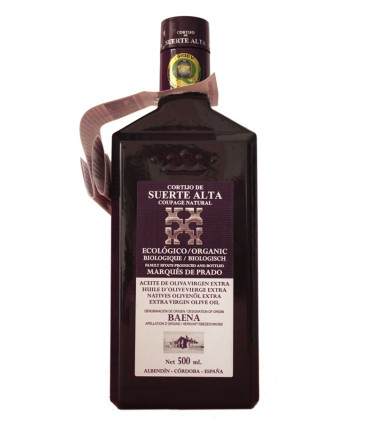
Organic Natural Blend
A blend of several traditional Córdoba varieties, this olive oil expresses the full complexity of the Baena terroir. It develops balanced aromas combining vegetal freshness, almond and ripe fruit notes.
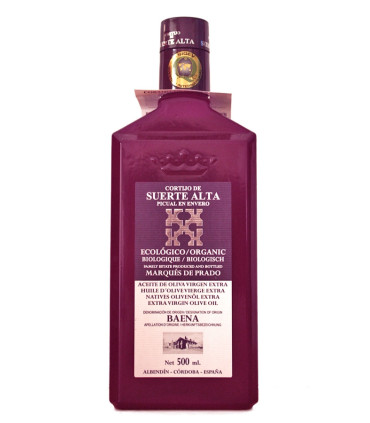
Organic Picual
Produced from Andalusia's emblematic variety, this olive oil displays the characteristics most sought after in Picual oils:
- green tomato;
- olive leaf;
- artichoke;
- high polyphenol content;
- excellent stability.
3.3.2. Above all, a philosophy
Beyond its olive oils, Cortijo Suerte Alta illustrates another side of modern Andalusian olive cultivation: the desire to reconcile quality, respect for terroir and environmental preservation. This approach has made it a benchmark for organic olive oil production in Spain.
A selection representative of Andalusia
Through Haza La Centenosa, Castillo de Canena and Cortijo Suerte Alta, TAPAS Shop offers a true journey into the heart of Andalusia's great olive-growing terroirs.
From the mountains of Sierra Mágina to the hills of Baena, these olive oils allow consumers to discover the richness of Andalusian olive cultivation, its emblematic varieties and the expertise of producers committed to excellence.
| Producer | Province | Main varieties |
|---|---|---|
| Haza La Centenosa | Jaén | Picual |
| Castillo de Canena | Jaén | Picual, Arbequina |
| Cortijo Suerte Alta | Córdoba | Picuda, Hojiblanca, Picual |
Conclusion
With more than 1.66 million hectares of olive groves, Andalusia accounts for nearly 60% of Spain's olive-growing area (Sources: Junta de Andalucía, Aforo del Olivar 2025/2026; MAPA).
But beyond these impressive figures, Andalusia is above all a land of traditions, expertise and passion expressed through every bottle of extra virgin olive oil. From the mountain olive groves of Sierra Mágina to the sun-drenched hills of Baena, each terroir leaves its mark on the olives and oils it produces.
The varietal richness of Andalusia, dominated by Picual but enhanced by emblematic cultivars such as Hojiblanca and Picuda, offers an exceptional aromatic palette that appeals to both enthusiasts and connoisseurs. This diversity, combined with increasingly demanding production techniques, has enabled Andalusia to establish itself as a global reference for extra virgin olive oil.
Through its selection of dedicated producers such as Haza La Centenosa, Castillo de Canena and Cortijo Suerte Alta, TAPAS Shop invites you to discover some of the finest expressions of this Andalusian heritage. Olive oils with true character, born from exceptional terroirs, continuing a story that began more than two thousand years ago and still contributes today to Andalusia's international reputation.
 The University of Jaén offers olive oil tasting courses. An entire region is devoted to its greatest treasure.
Glossary of Andalusian olive oil
Almazara
Spanish term referring to the olive mill where olives are transformed into olive oil.
The word comes from the Arabic "al-ma'sara" (المعصرة), meaning "the place where pressing takes place". The Arabic heritage remains highly visible in Andalusian agricultural vocabulary.
EVOO
Extra Virgin Olive Oil.
This is the highest quality category for olive oil.
To qualify as EVOO, the oil must:
- be obtained exclusively through mechanical processes;
- have a free acidity level of 0.8% or less;
- present no organoleptic defects during sensory evaluation.
Olivar
Spanish term meaning an olive grove, a land area planted with olive trees.
This word is frequently found in Spanish agricultural statistics:
- superficie de olivar: olive-growing area;
- olivar tradicional: traditional olive grove;
- olivar ecológico: organic olive grove.
Aceituna de mesa
Table olive intended for direct consumption.
Unlike olives grown for oil production (aceituna de almazara), they are harvested according to different criteria in order to preserve their appearance and texture.
Aceituna de almazara
Olives intended for olive oil production.
They represent the vast majority of Andalusian olive production.
Recolección temprana
Early harvest.
Olives are harvested while they are still predominantly green.
This practice generally results in:
- more aromas;
- higher polyphenol content;
- better stability;
- more intense oils.
This is the case for many premium olive oils, including certain Castillo de Canena selections.
Coupage
A blend of several olive varieties designed to achieve a specific aromatic profile.
In the Baena PDO, traditional blends often combine:
- Picuda;
- Hojiblanca;
- Picual;
- Lechín.
The Cortijo Suerte Alta Organic Natural Blend is a good example.
Polyphenols
Natural antioxidant compounds found in olives.
They contribute to:
- oil stability;
- its bitterness and pungency;
- certain recognized nutritional properties.
Picual olive oils are particularly rich in polyphenols.
PDO (Protected Designation of Origin)
The European quality label guaranteeing a product's geographical origin and production standards.
A PDO guarantees:
- a precise geographical origin;
- authorized olive varieties;
- defined production methods;
- independent quality controls.
The main PDOs mentioned in this article are:
- Sierra Mágina (Jaén)
- Baena (Córdoba)
Virgin, extra virgin and lampante olive oil
The three main categories of olive oil obtained directly from olives:
| Category | Quality level |
|---|---|
| EVOO (Extra Virgin) | The highest quality level |
| Virgin Olive Oil | Good quality with minor defects |
| Lampante Olive Oil | Not suitable for direct consumption, intended for refining |
The term lampante comes from the period when this type of oil was mainly used as fuel for oil lamps.
Acidity
One of the quality criteria most frequently mentioned.
Contrary to a common misconception, acidity does not refer to the acidic taste of olive oil.
It measures the proportion of free fatty acids present in the oil and serves as an indicator of the condition of the olives at the time of processing.
Low acidity is generally a sign that harvesting and extraction were carried out under optimal conditions.
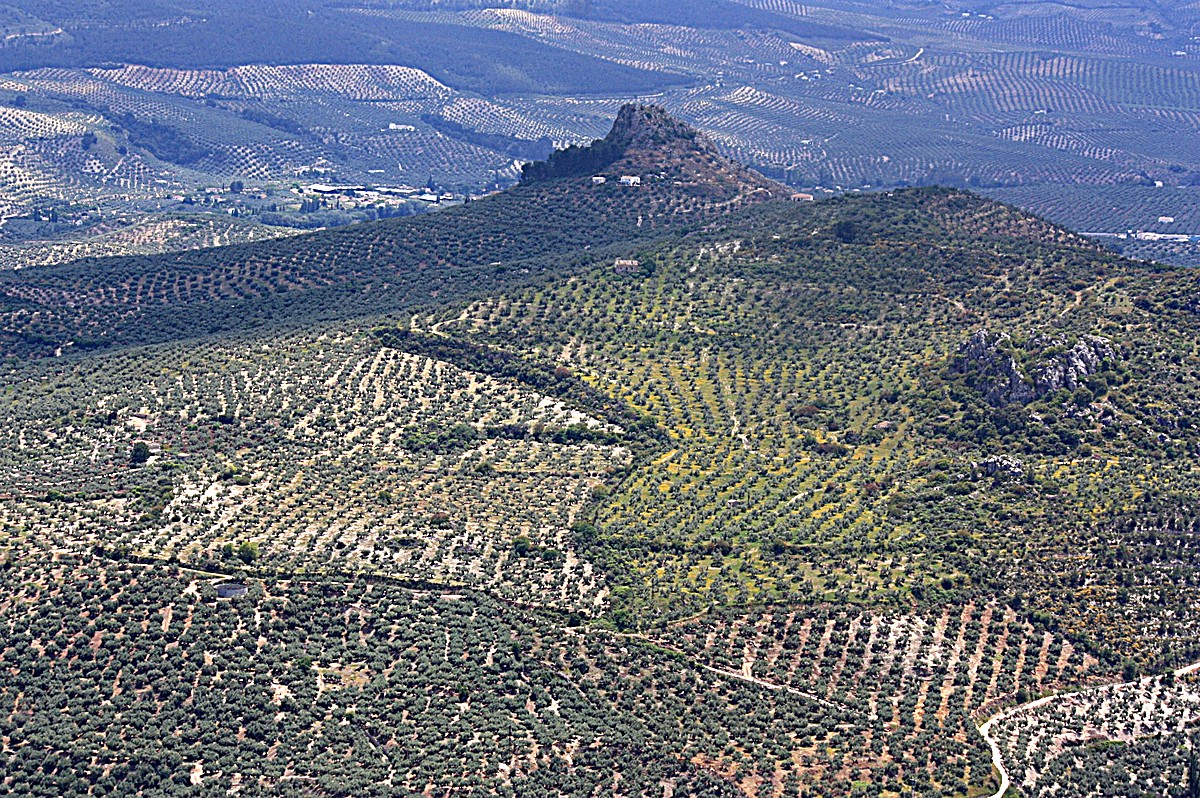 Endless olive groves - Andalusia 2018
Sources:
- Junta de Andalucía
- Provincial Council of Jaén
- Union of Farmers and Livestock Breeders – Young Farmers (COAG Jaén)
- Multiterritorial Information System of Andalusia (SIMA)
- Institute of Statistics and Cartography of Andalusia (IECA)
- Ministry of Agriculture, Fisheries and Food (MAPA)
- Sierra Mágina PDO Regulatory Council
- Baena PDO Regulatory Council
- International Olive Council
- MAPA – ESYRCE 2024
- IFAPA
- Fundación del Olivar
- PDO Aceite de Málaga
- PDO Sierra Mágina
- Museum of Olive Culture
- Olive Grove and Olive Oil Interpretation Center