en
en
 fr
fr es
es
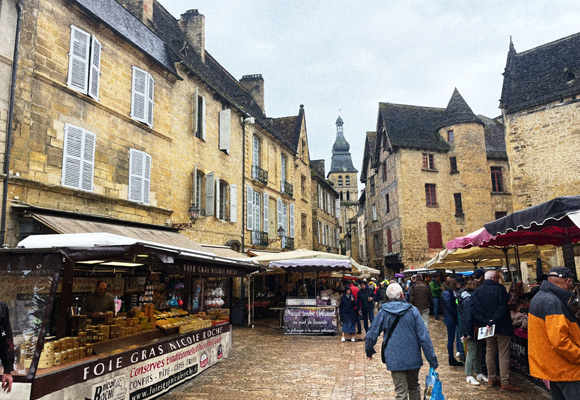
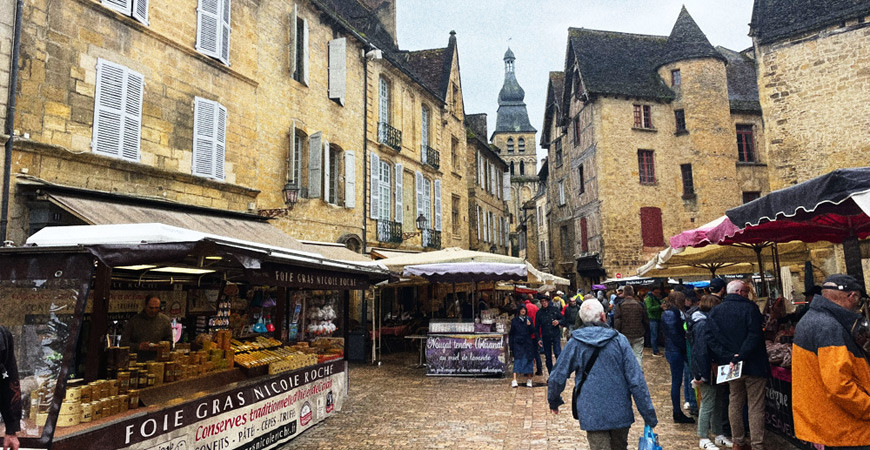
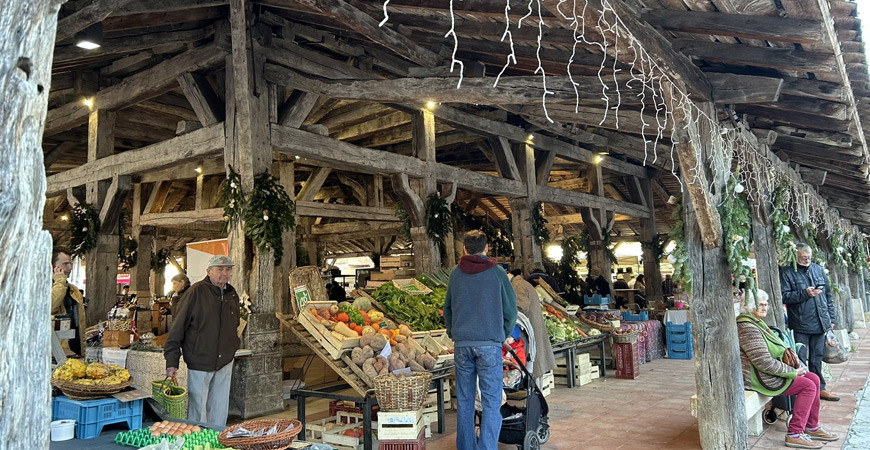
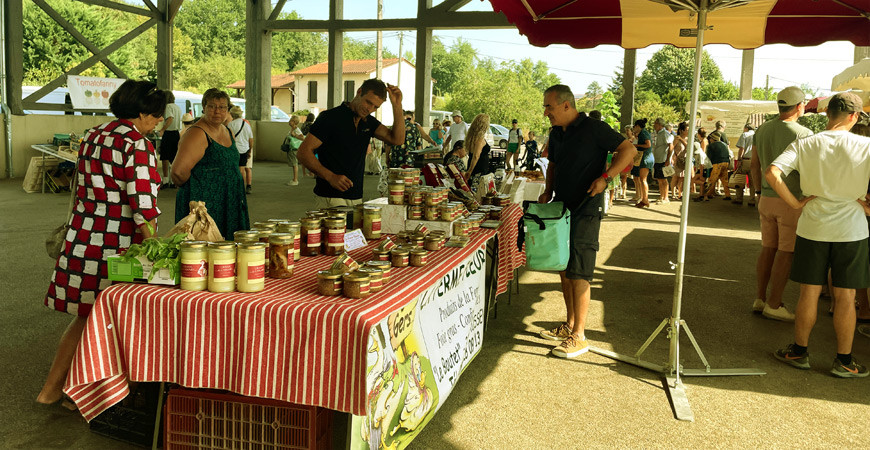
Some markets you pass through; others you visit. The market in Sarlat-la-Canéda, capital of the Périgord Noir, belongs firmly in the second category. Twice a week, its stalls spread out between honey-coloured stone façades and stone-slab roofs, from the Place de la Liberté to the forecourt of Saint-Sacerdos Cathedral. Foie gras, confits, farmhouse cheeses, walnuts, strawberries, charcuterie and, in winter, black truffles: the whole of the Périgord fits into these few streets.
We went in summer and in winter. Two very different atmospheres, but the same urge to fill our basket.
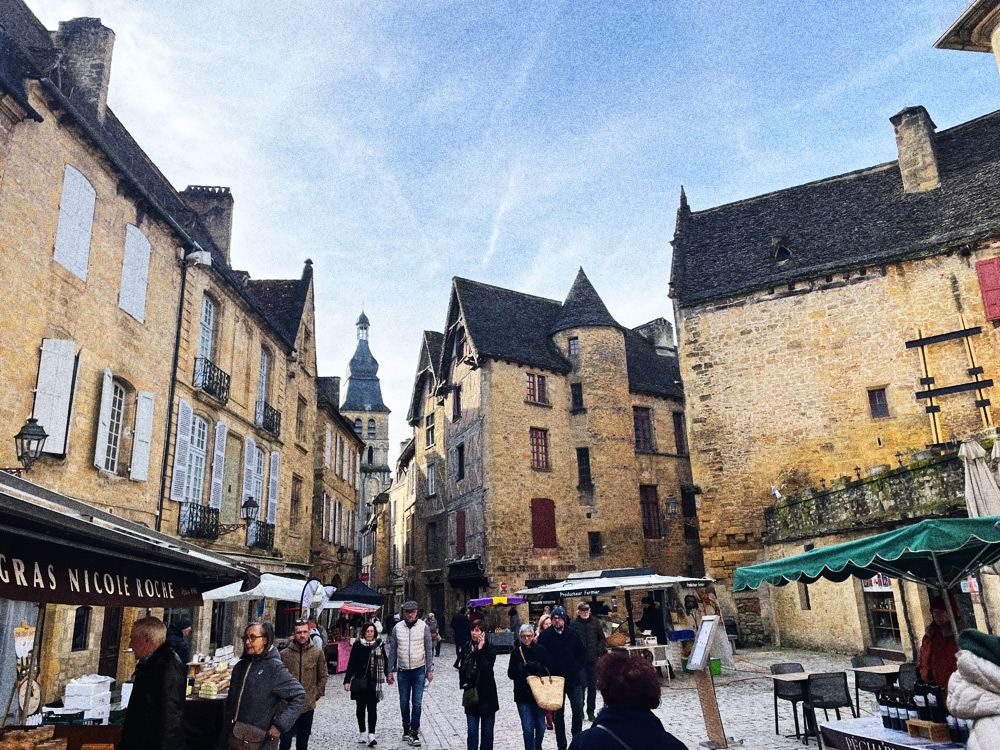 Rue de la Liberté on a winter Saturday, with the cathedral bell tower in the background
1. Sarlat market: where and when
1.1. Two mornings a week, all year round
The market takes place on Wednesday and Saturday mornings, whatever the season. Saturday is the big day: the food market fills the historic centre from around 8:30 am to 1 pm, while the non-food traders stay until the end of the day along the Traverse (Rue de la République).
On Saturdays, the stalls stretch along Rue Tourny, Place du Peyrou, Rue and Place de la Liberté, Rue Victor-Hugo, Place des Oies, Place Boissarie and Rue Fénelon. The easiest way is to let yourself drift, from the foot of the cathedral to the Place du Marché aux Oies (Goose Market Square).
| Market | Days and times | Location |
|---|---|---|
| Food market | Wednesday and Saturday, 8:30 am – 1 pm | Historic centre (Place de la Liberté and nearby streets) |
| Non-food market | Saturday, all day | La Traverse (Rue de la République) |
| Covered market | Several days a week | Former Sainte-Marie church |
| Truffle market (retail) | Saturday, 9 am – 12 noon, December to late February | 1 Rue Fénelon |
| Truffle market (wholesale) | Wednesday, from 2:30 pm, late November to late February | Town Hall arcades |
The covered market's opening hours vary with the season: check on site or with the tourist office.
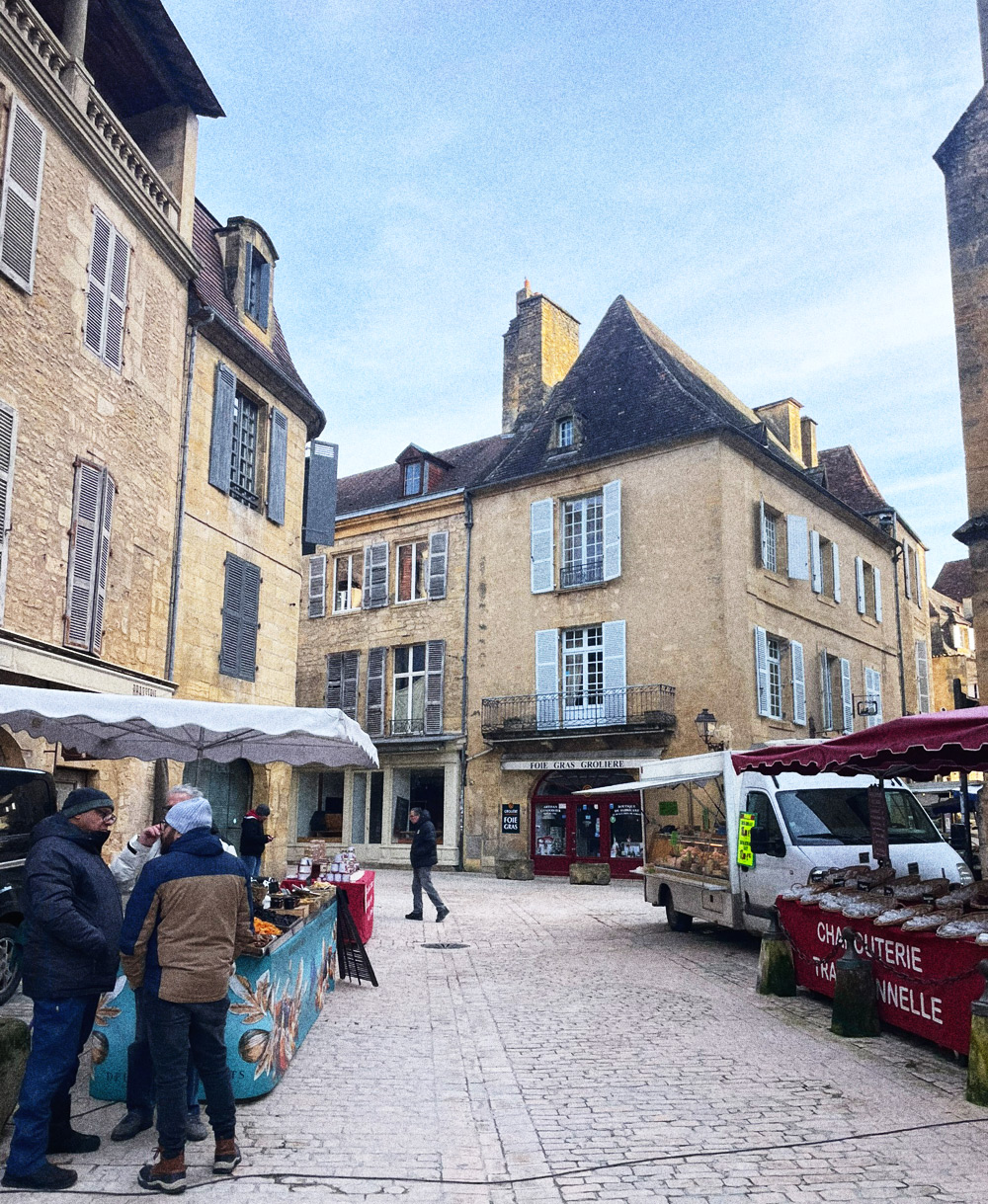 The beauty of the setting adds to the friendly atmosphere
Our tip: arrive early. From mid-morning, especially in summer, the narrow streets get very crowded.
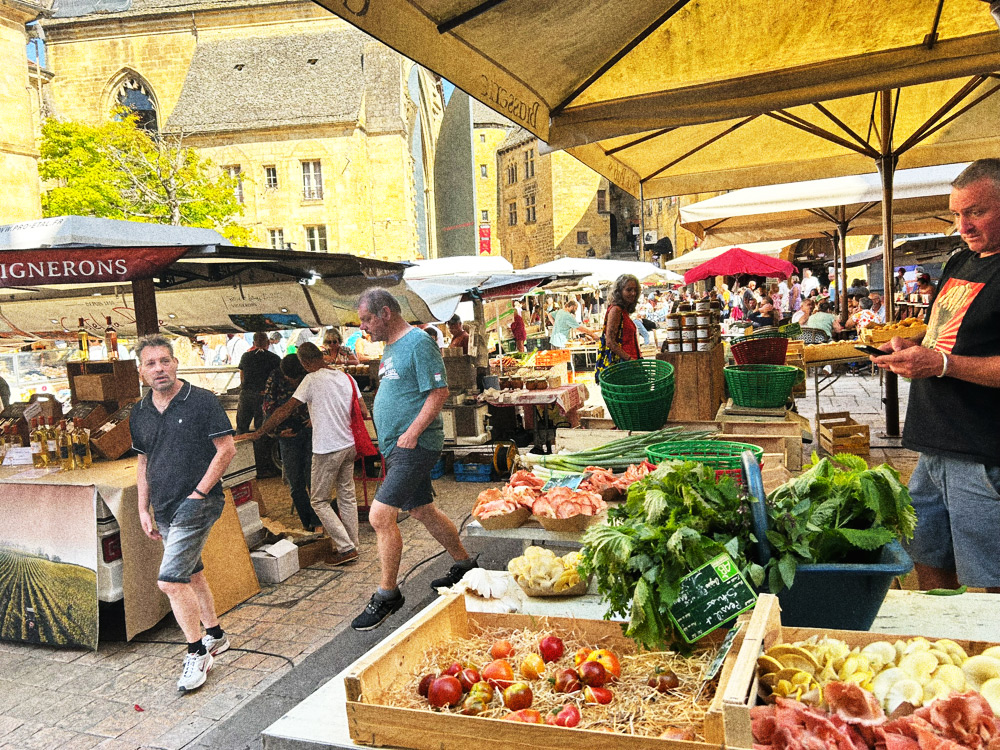 Organic vegetables, oyster mushrooms and winegrowers, at the foot of the cathedral
1.2. A covered market inside a church
Not to be missed: the covered market, housed in the former Sainte-Marie church. Its huge steel doors, more than fifteen metres high and designed by the architect Jean Nouvel, open onto the producers' stalls. A panoramic lift, fitted into the bell tower, also offers a view over the town's rooftops.
2. Sarlat, a merchant town since the Middle Ages
2.1. The burghers against the abbot
Sarlat grew up around a Benedictine abbey. But it was trade that made it a town. In the 13th century, the merchant burghers spent decades opposing the abbot in order to govern their town themselves.
In 1298, the Book of Peace (Livre de la Paix) finally recognised their consulate, and King Philip IV "the Fair" ratified it in 1299. The consuls then gained part of the town's powers, including tax collection and the management of public works. They built the ramparts and, over the centuries, the fine town houses that still line the market square.
Trade has always been concentrated at the foot of the former abbey, which became a cathedral when Sarlat was made a bishopric in 1317. Place names still bear witness to this, such as the Place du Marché aux Oies.
2.2. From the bishop's palace to Sainte-Marie church
The market has had several homes. In the early 20th century, after the town hall moved out in 1900, a covered market opened on the ground floor of the former bishop's palace, which now houses the tourist office.
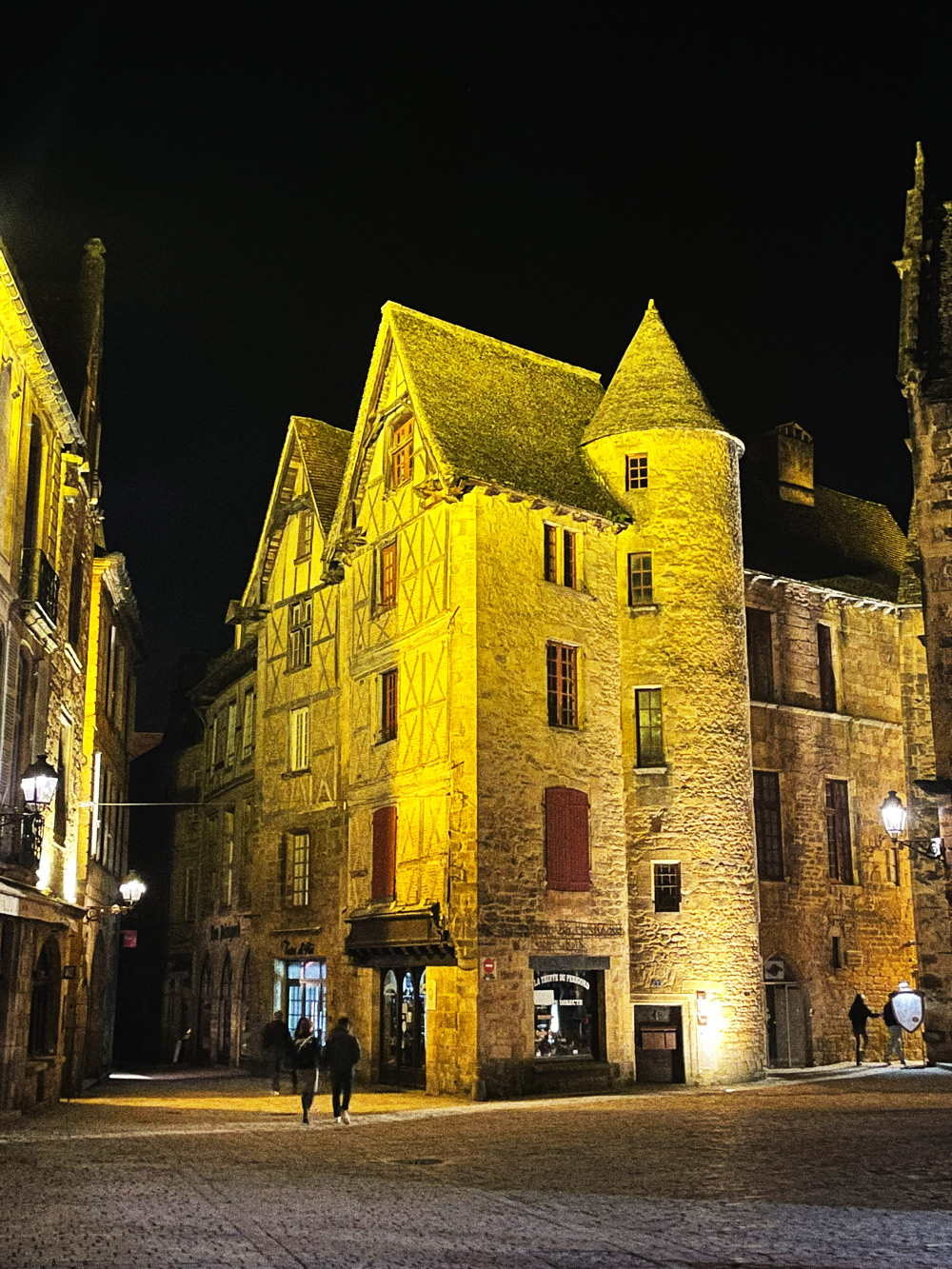 An "empty" Sarlat by night
It was only in the early 2000s that Sainte-Marie church, no longer used for worship since the French Revolution, became the covered market we know today.
2.3. 1964: a protected setting
If the market takes place in such an intact setting, it is thanks to the Malraux law of 1962. On 27 August 1964, Sarlat's old town became one of the very first "protected sectors" in France. Since then, generations of visitors have discovered these eleven restored hectares, very often on a Saturday morning.
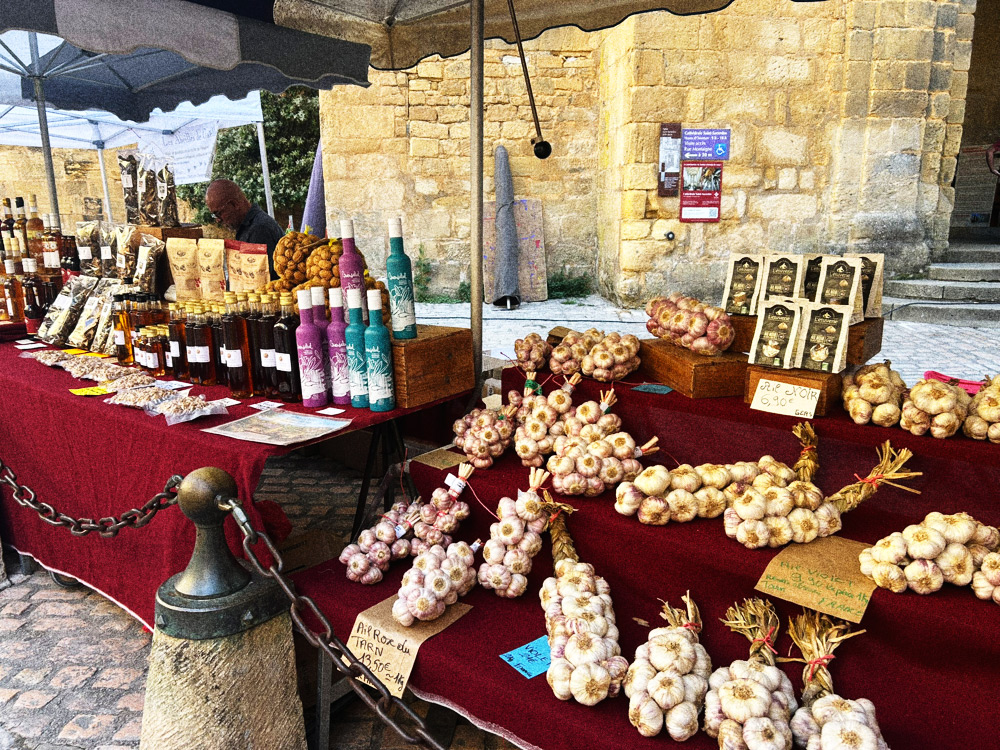 Pink, purple and black garlic at the foot of Saint-Sacerdos Cathedral
3. Black truffles, the stars of winter
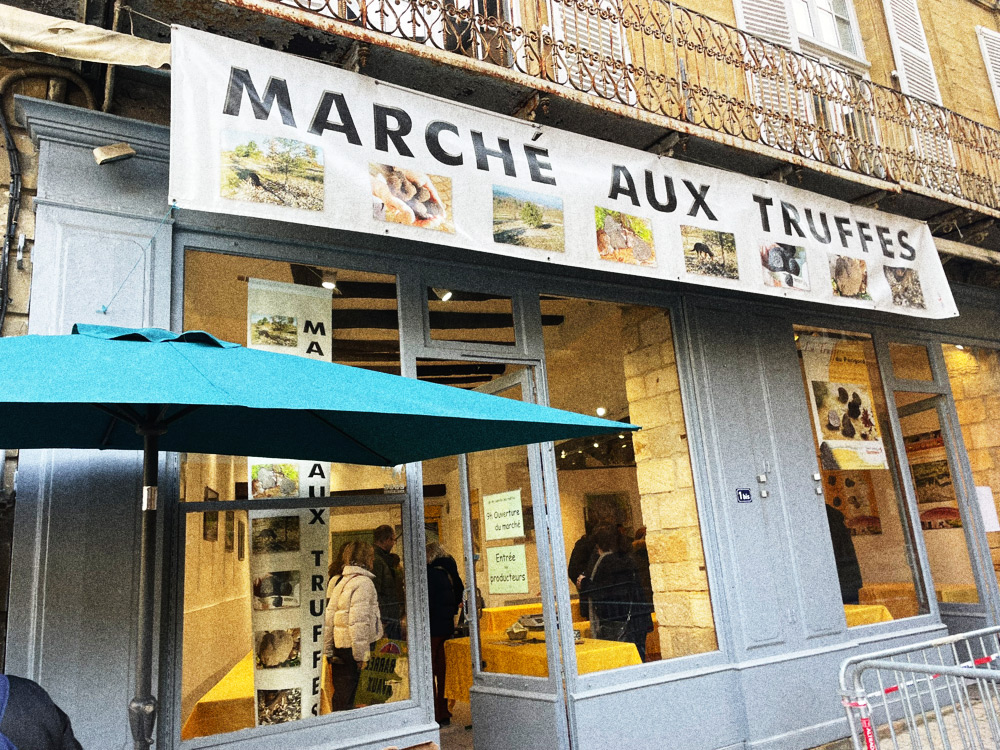 The retail truffle market on Rue Fénelon: opens at 9 am
3.1. A short season: December to February
The Périgord black truffle, Tuber melanosporum, ripens in the depths of winter, from December to March. Sarlat's truffle markets follow this calendar: the 2025–2026 season opened in early December and ended in late February.
Every year in mid-January, the Truffle Festival takes over: a prize-awarding market, truffle-hunting demonstrations with dogs, workshops to smell and identify truffles, and chefs cooking in public.
3.2. Two controlled markets
Sarlat holds two separate truffle markets:
- the retail market, open to the public, on Saturdays from 9 am to 12 noon, at 1 Rue Fénelon;
- the wholesale market, reserved for truffle growers and professionals (dealers, restaurateurs, retailers), on Wednesdays from 2:30 pm under the Town Hall arcades. Created in 2009, it was the first wholesale truffle market in Aquitaine.
At a controlled market, truffles are inspected before sale: they must be brushed, sorted and graded. For a first-time buyer, it is the best guarantee of going home with a genuine melanosporum.
3.3. The truffle trees of the Périgord
The truffle is an underground fungus that lives in symbiosis with the roots of certain trees. In the Périgord, the king of truffle trees is the downy oak, an oak with velvety leaves that often keeps its dry leaves on the branches all winter. Truffles are also found under the holm oak, the hazel, the hornbeam, the lime tree and some pines.
But the tree is not everything: the black truffle needs limestone soil that is well drained and sunny. At the foot of a productive tree, a circle of sparse grass often appears, as if scorched: this is the famous brûlé, the truffle grower's first clue.
The contrast with the Spanish dehesa is interesting. There, Iberian pigs feed on acorns before giving us acorn-fed (bellota) ham. The encina of the dehesa is in fact the same tree as the Périgord's holm oak, alongside the cork oak. But the dehesa's soils, often granitic and acidic, do not suit the black truffle. The same family of trees, but two terroirs and two very different treasures: the acorn on one side, the truffle on the other.
3.4. How much does a truffle cost?
Truffle prices vary widely from one season to the next, depending on the weather, the harvest and demand. As a guide, in 2024 black truffles sold for an average of around €1,200 to €1,350 per kilo on the wholesale markets of south-eastern France, and up to €1,500 for the Extra grade. Retail prices are noticeably higher.
Don't worry: nobody buys truffles by the kilo. A few dozen grams are enough to flavour an omelette, scrambled eggs or a dish of pasta. At the retail market, the day's price is displayed, and the growers weigh the truffle in front of you.
4. Our favourite stallholders
4.1. La Ferme des Pins: exceptional sheep's milk cheeses
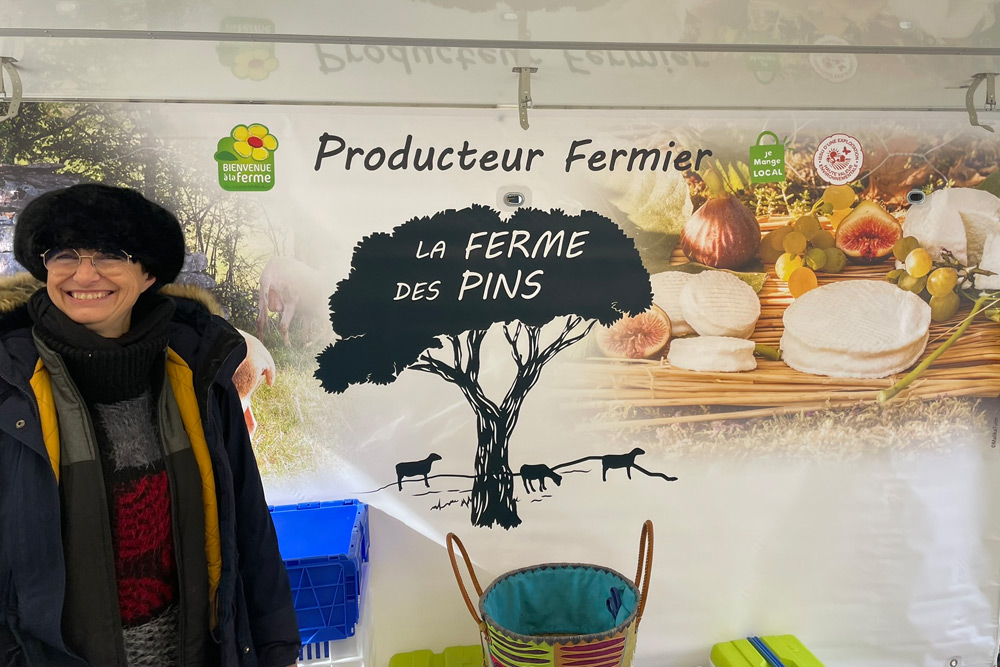 La Ferme des Pins stall on a winter morning
This was our best discovery. Based in Chartrier-Ferrière since 1984, Sandrine and Gilles Faure raise dairy ewes and turn their milk into cheeses, yoghurts and rice pudding themselves. They sum up their work as three trades in one: farmer, cheesemaker and trader.
The result is simply exceptional: delicate cheeses, fresh or more matured, that show all the care taken from the meadow to the stall.
Sadly, on our last visit in summer 2026, the farm was up for sale and still looking for a buyer. We sincerely hope this know-how will find a successor.
4.2. July & Charbonnier: jams made in the cauldron
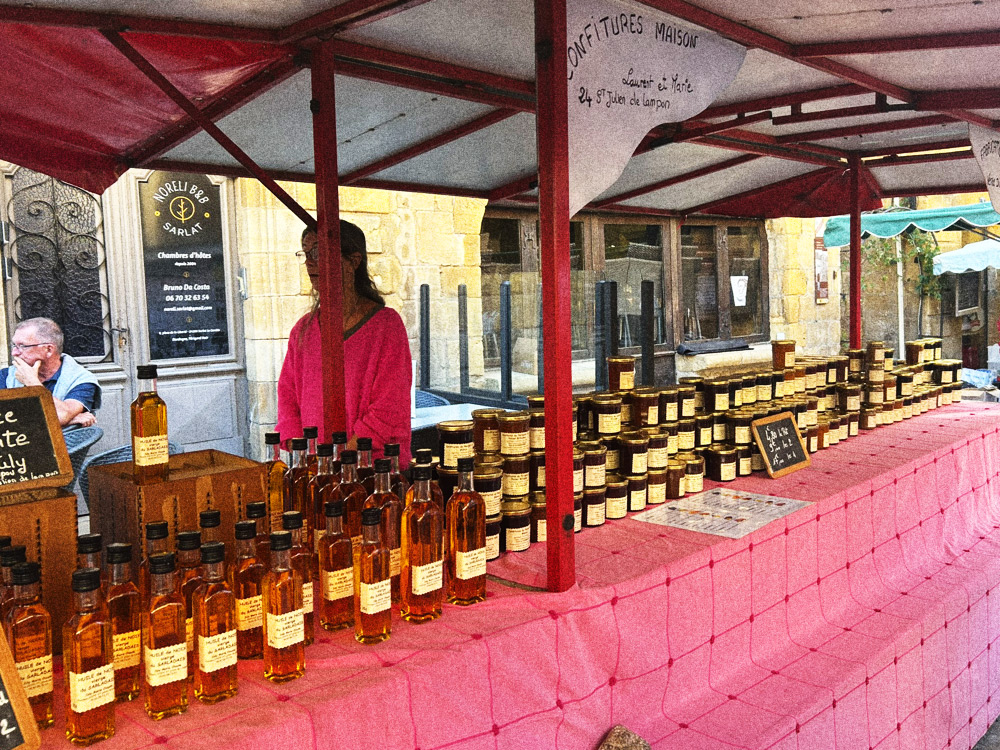 Homemade jams and virgin walnut oil from the Sarladais
In Saint-Julien-de-Lampon, Marie-Claude July and Laurent Charbonnier make their jams the old-fashioned way, in a cauldron. The choice is impressive, with fruit from the Périgord Noir in the spotlight. They also sell a virgin walnut oil from the Sarladais.
So far, we have liked everything we have tasted. A special mention for the black fig jam, with an unusually high fruit content.
4.3. La Ferme de Bardenat: quality preserves
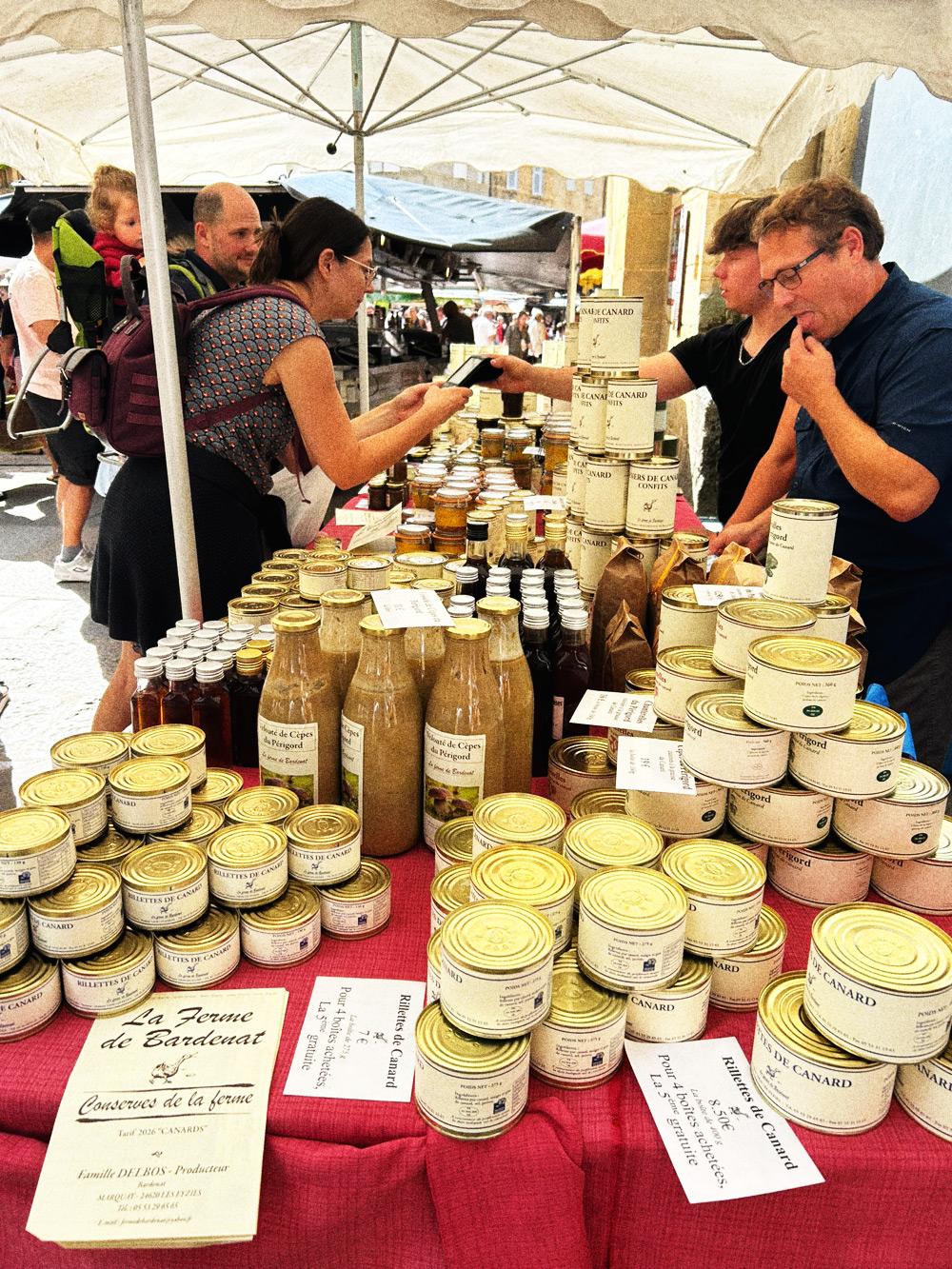 Rillettes, confits and cep velouté from La Ferme de Bardenat
The Delbos family raise their ducks in Marquay, near Les Eyzies, and sell their farm preserves directly: duck rillettes, confit gizzards and legs, ceps and a remarkable Périgord cep velouté.
This is exactly what you come to Sarlat for: no-frills farm produce in tins, which keeps for months and is shared in minutes.
La Ferme de Bardenat
Delbos family, producers
Bardenat, Marquay – 24620 Les Eyzies
4.4. La Ferme du Vignal: goose preserves, from farm to market
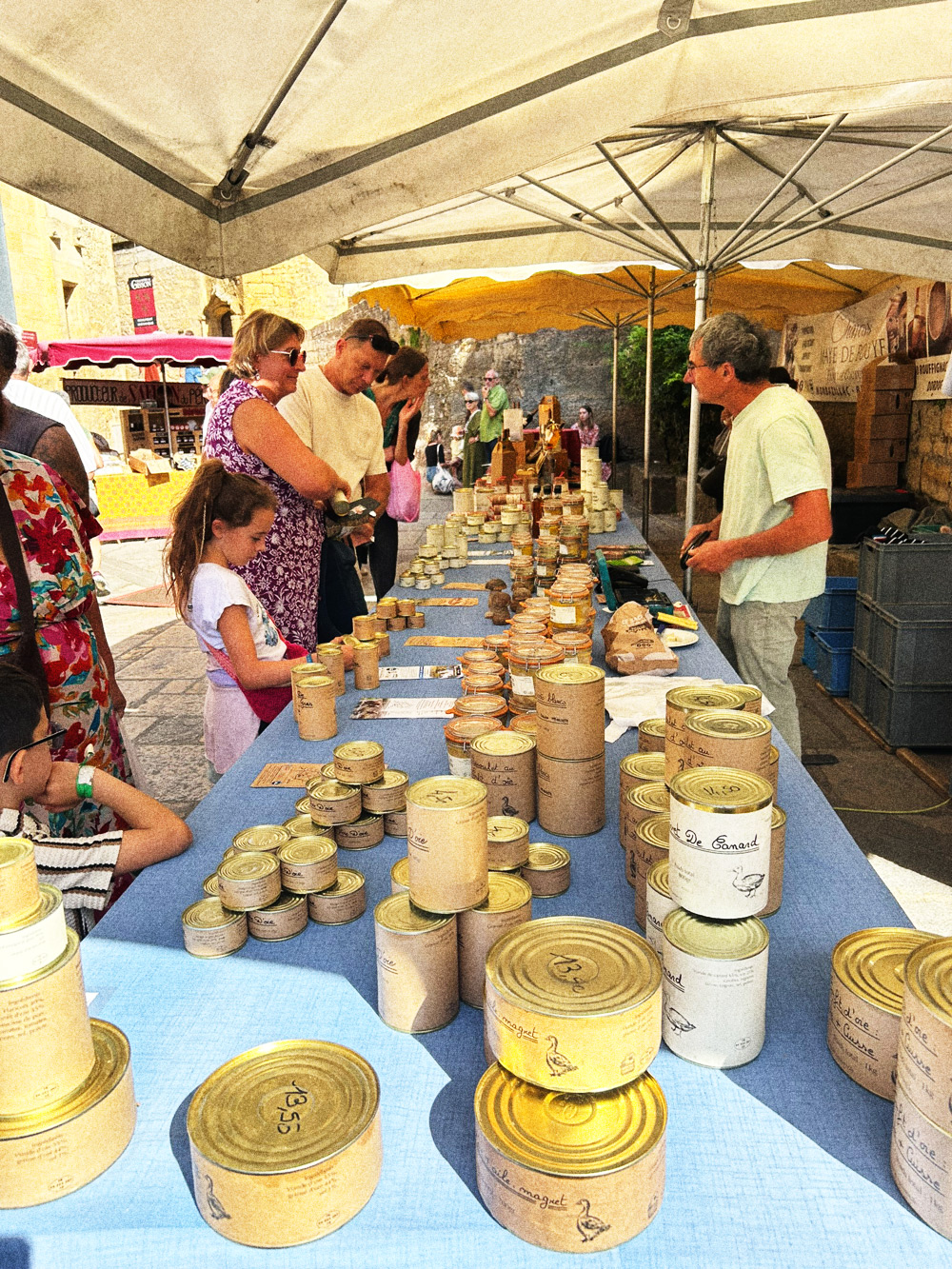 La Ferme du Vignal, in Marquay
We didn't stop at the stall: we went all the way to the farm. In Marquay, between Sarlat and Les Eyzies, Florence and Jean-Jacques Espinasse raise geese and ducks, then make their own farm preserves, which you will find at Sarlat market.
The free visit, available all year round, follows the whole process: the geese growing from goslings to the force-feeding stage, then the butchering and the making of the preserves. It ends with a tasting. You leave with a new view of the product… and a few tins of goose confit in the boot.
La Ferme du Vignal
Florence and Jean-Jacques Espinasse
22 Route du Lac de la Broune, Le Vignal – 24620 Marquay
Free farm visit and tasting, all year round
4.5. The reign of preserves
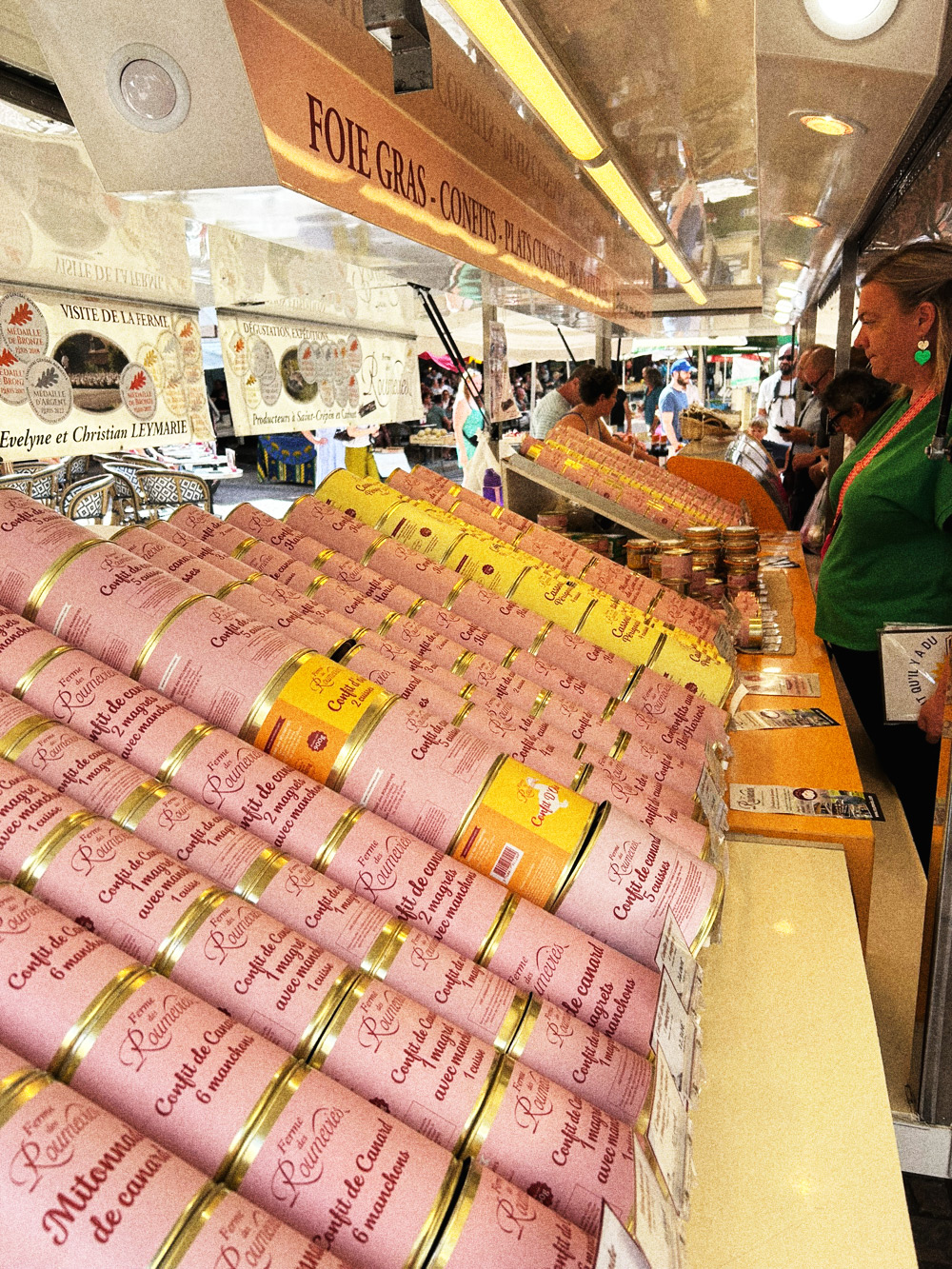 Duck confit, magrets and cassoulet: preserves rule in Sarlat
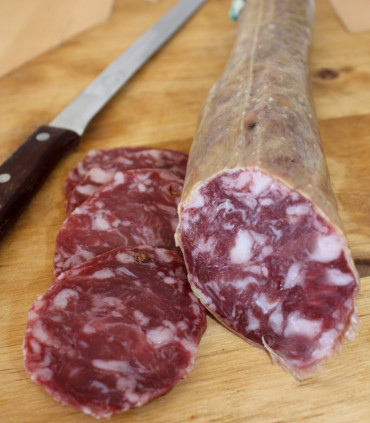
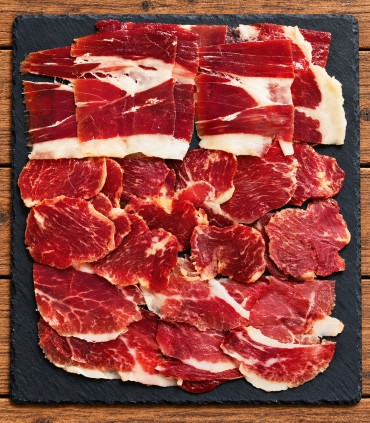
More broadly, preserves rule at Sarlat market: duck and goose confits, cassoulets, pâtés, terrines, foie gras… This tradition of preserving meat in its own fat recalls that of Spain. There too, people have always known how to preserve food: by salting and curing ham and embutidos (cured sausages), or by jarring the best produce of land and sea.
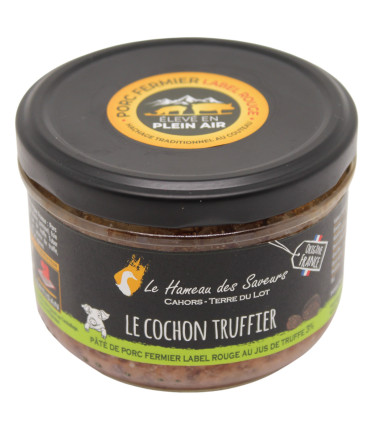
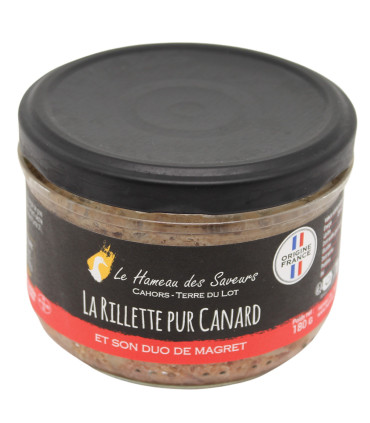
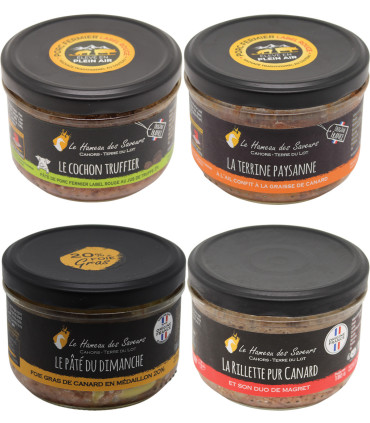
It is in this spirit that we selected the artisan preserves of Le Hameau des Saveurs, in the neighbouring Lot department (Quercy). Preserves to slip onto a board next to some Spanish charcuterie.
5. Our verdict: a superb market, best visited with a discerning eye
Sarlat market is superb, and such a setting deserves nothing but praise. But, a victim of its own success, it sometimes feels a little too much like a tourist attraction. Not all the traders offer fresh, local or certified produce.
We came across stalls selling mediocre saucisson, and expensive, unappealing fruit and vegetables from unexpected origins in the very heart of the Périgord. Over the past ten years, the number of visitors has grown, but the quality of several stalls has declined.
Our advice: look for the producers who sell what they raise or make, and take the time to talk with them. They are what makes this market worthwhile.
And once your basket is full, all that's left is to sit down at one of the many café terraces on the Place de la Liberté and enjoy the beauty of the town.
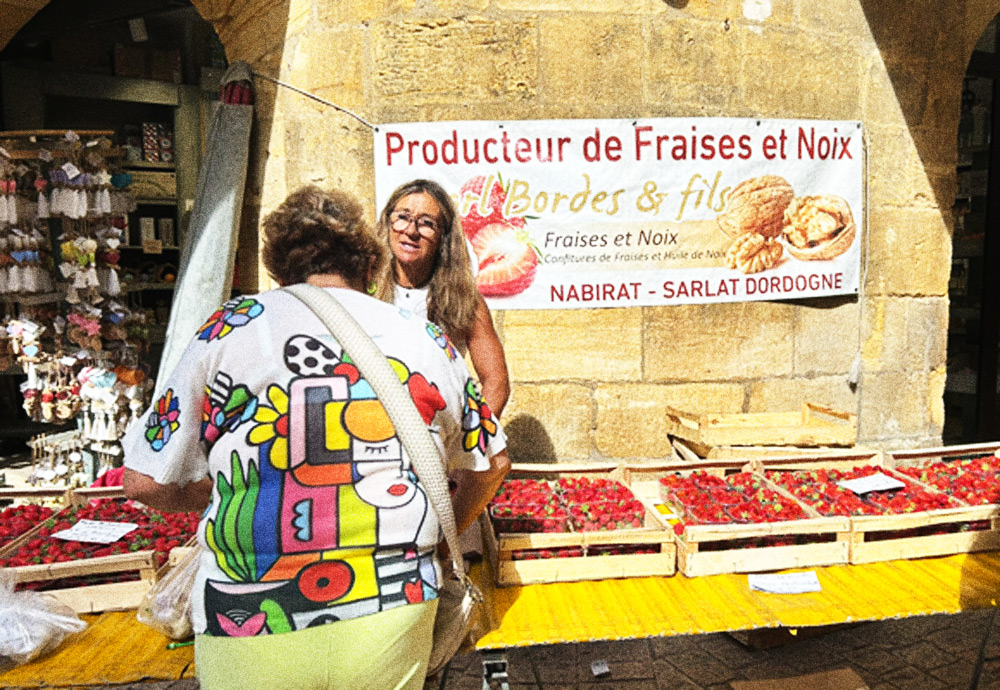 Périgord strawberries and walnuts from Nabirat
Sarlat market glossary
Book of Peace (Livre de la Paix)
Charter of customs signed in 1298 between the abbot and the burghers of Sarlat, then ratified by Philip IV in 1299. It recognised the consulate, meaning the government of the town by consuls drawn from the merchant class.
Protected sector (secteur sauvegardé)
A scheme created by the Malraux law of 4 August 1962 to protect and restore historic town centres. Sarlat has benefited from it since 27 August 1964.
Tuber melanosporum
The scientific name of the black truffle, known as the "Périgord truffle". It is harvested in winter, from December to March.
Truffle hunting (cavage)
Searching for truffles in the ground, nowadays usually with a trained dog and in the past with a pig.
Brûlé
An area of sparse or bare grass at the foot of a truffle tree. It is a sign that truffles are present in the soil.
Controlled market
A truffle market where each batch is checked before sale: species, quality, cleanliness and grade. It guarantees that you are buying a genuine black truffle at a fair price.
Confit
Duck or goose meat cooked slowly, then preserved in its own fat. It is the great preserving tradition of south-west France.
Sources:
- Ville de Sarlat – Opening of the truffle markets
- Ville de Sarlat – Organisation of the Saturday food market
- Ville de Sarlat – André Malraux and the protected sector (2026)
- French Ministry of Culture, Mérimée database – Former bishop's palace and former town hall of Sarlat
- CRÉDOC – Safeguarding and enhancement plans for historic town centres (1995)
- Jean Maubourguet – Le Périgord méridional des origines à l'an 1370 (Gallica)
- Jean Tarde – Les Chroniques (ed. Gaston de Gérard)
- Dordogne Périgord Tourisme – Truffle markets
- Dordogne Périgord Tourisme – Sarlat Truffle Festival
- CRPF – Technical sheet: truffle-ground forestry
- UFC-Que Choisir – Truffle buying guide
- Cerfrance Dordogne – La Ferme des Pins