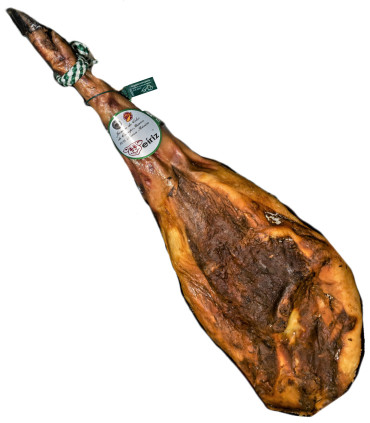
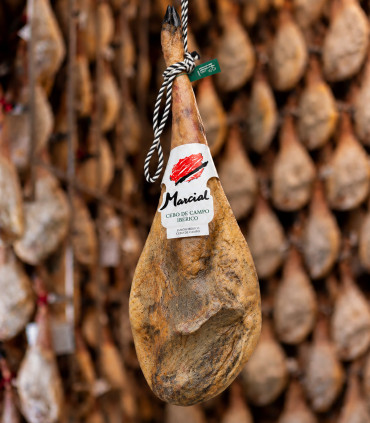
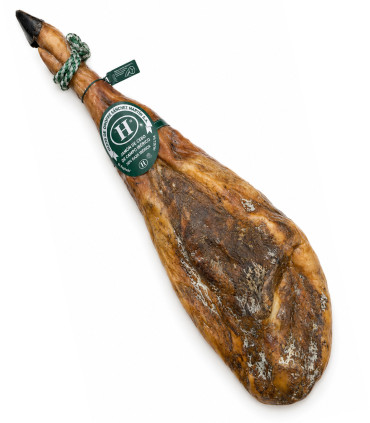
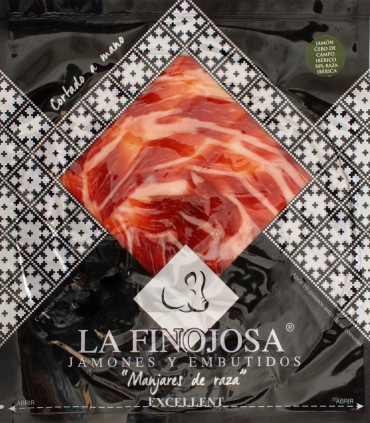
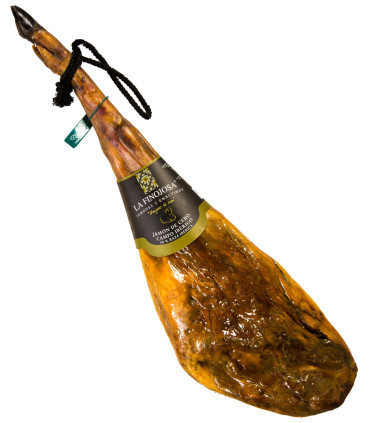
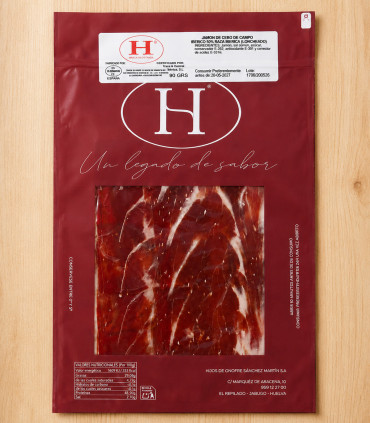
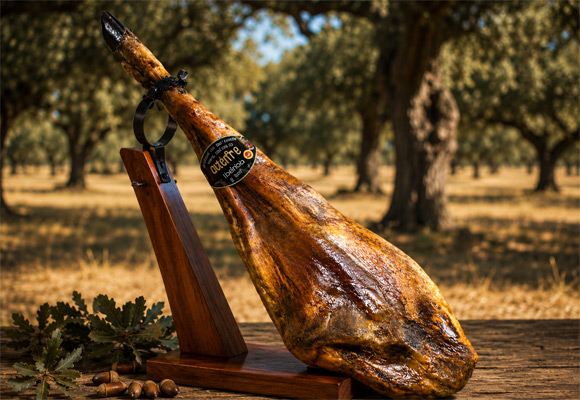
What is Iberian Cebo de Campo ham?
Iberian Cebo de Campo ham belongs to the family of Spanish Iberian hams. It is produced from Iberian pigs raised outdoors or in semi-free-range conditions in the dehesas of south-western Spain.
Unlike Iberian Bellota ham, the animals are not exclusively fattened on acorns during the montanera. Their diet is based mainly on carefully selected cereals and legumes, complemented by the natural resources they find in their environment. This farming method produces high-quality hams while remaining more affordable than Bellota hams.
What is the difference between Cebo de Campo and Bellota?
The main difference lies in the pigs' diet during the fattening period.
To produce Iberian Bellota ham, pigs must roam freely through the dehesas during the montanera and feed primarily on acorns. This unique diet promotes exceptional intramuscular fat and the development of highly complex aromas.
Pigs destined for Iberian Cebo de Campo ham also have access to outdoor areas, but their diet is mainly based on feeds made from cereals and legumes. The result is a ham with milder, more approachable flavours while retaining the marbling characteristics typical of the Iberian breed.
Iberian Bellota ham represents the pinnacle of Iberian ham production, while Iberian Cebo de Campo ham is often considered the best compromise between quality, authenticity and price.
What do 50%, 75% and 100% Iberian mean?
Since the reform of the Spanish Iberian standard, introduced by Royal Decree 4/2014 of January 10, 2014, the percentage displayed on the label corresponds to the animal's genetic purity.
A 100% Iberian ham comes from parents that are themselves 100% Iberian and registered in the official herd book. This is the highest level of breed purity recognised by Spanish regulations.
A 75% Iberian ham generally comes from a cross between a 100% Iberian sow and a 50% Iberian boar. It retains a high proportion of Iberian genetics and offers sensory qualities very close to those of the most prestigious hams.
A 50% Iberian ham generally comes from a cross between a pure Iberian sow and a Duroc boar. This category now represents a significant share of Spanish production and makes Iberian ham more accessible. Most Cebo de Campo hams belong to this category.
The breed percentage alone does not determine the quality of a ham. Feeding, farming conditions, curing time and the producer's expertise also play a major role.
Slow curing to develop aromas
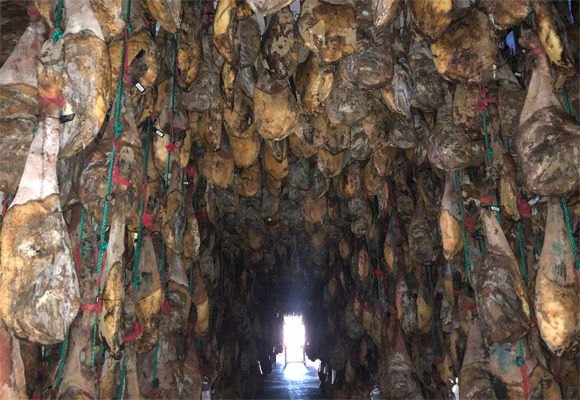
Like other Iberian hams, Cebo de Campo hams benefit from a long curing period. After salting, they are gradually dried and then aged for several years in natural drying rooms and specialised cellars.
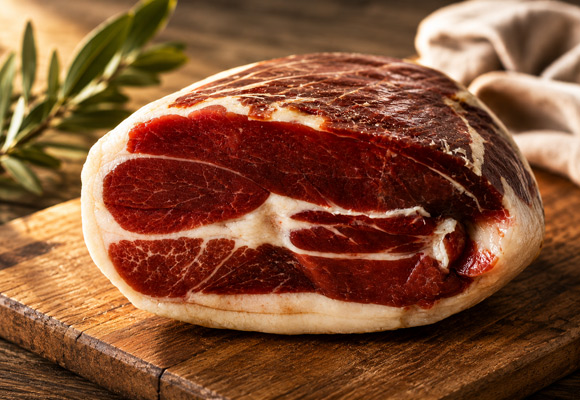
This maturation process allows the fat to distribute evenly throughout the meat while the aromas gain depth and complexity. Notes of nuts, hazelnut and cured meat gradually develop to create a rich and balanced tasting experience.
How should Iberian Cebo de Campo ham be enjoyed?
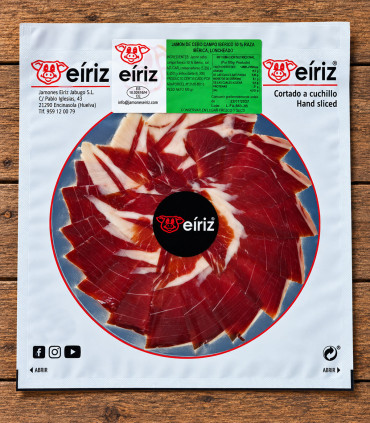
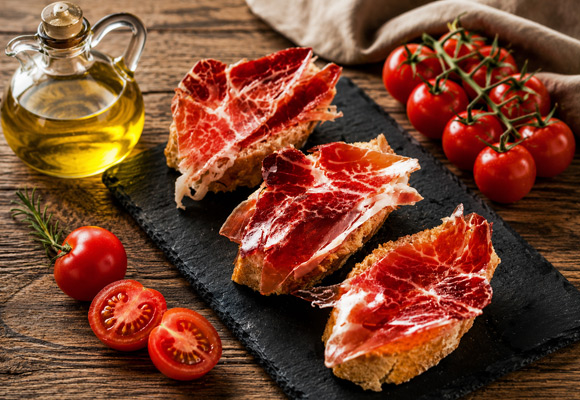
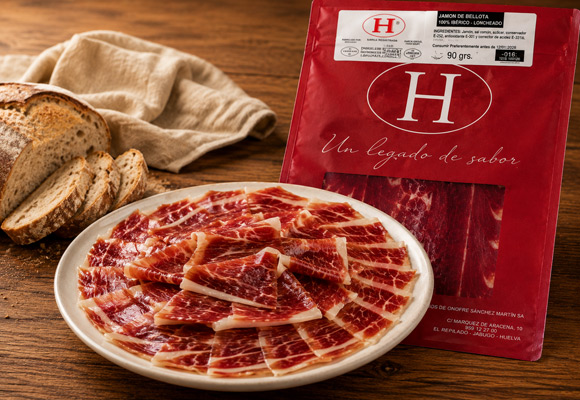
Iberian Cebo de Campo ham is best enjoyed at room temperature. Thinly sliced, it reveals the full delicacy of its fat and the balance of its flavours.
Served on its own, accompanied by quality bread or included in a selection of tapas, it offers an accessible introduction to the world of Iberian ham. It is also an excellent choice for regular enjoyment or for discovering the great hams of Spain for the first time.
Other types and cuts of Spanish ham
 en
en
 fr
fr es
es