en
en
 fr
fr es
es
In order to prevent fraud, to inform consumers and preserve the Iberian breed, a new quality standard (Royal Decree 4/2014) entered into force on 10 January 2014. It regulates and defines the characteristics quality and labeling of Iberian products: meat, ham, palette, and loin.
Differentiation of the stamped labels on hams since 2014
The new rules concerning to the ham have been applied by royal decree (Since January 2014). This decree aims to correct the wanderings that had been made in the sector, avoiding too high number of varieties and labels which could be potentially confusing, and trying to clarify the consumer about what they eat. It was appropriate to strengthen the traceability system traditionally established on the basis of self control by the same operators. The data displayed on the label that accompanies each piece allow identifying the breed of animal and their feed.
Guarantee of quality
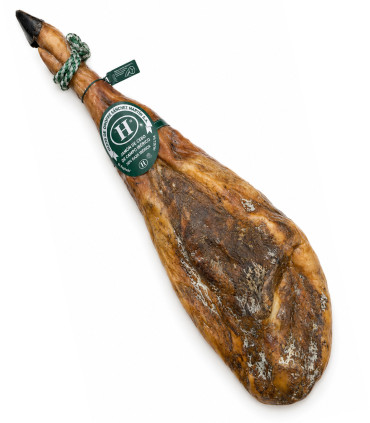
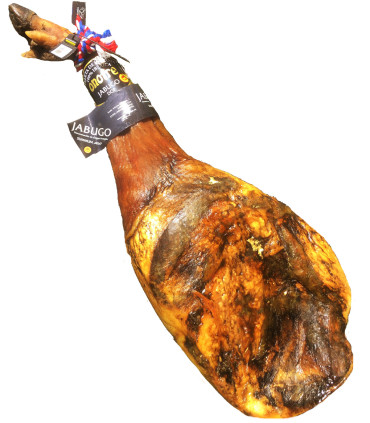
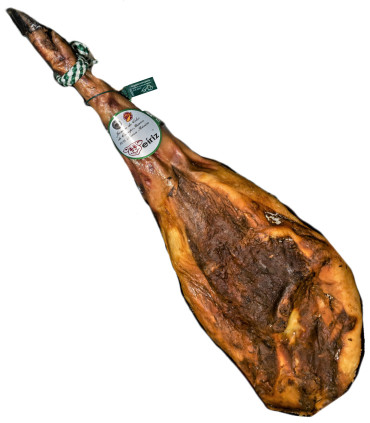
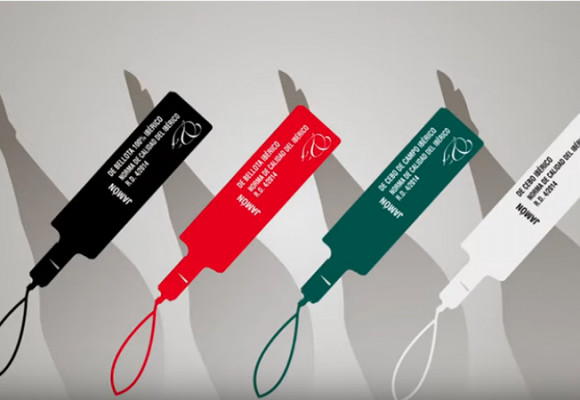
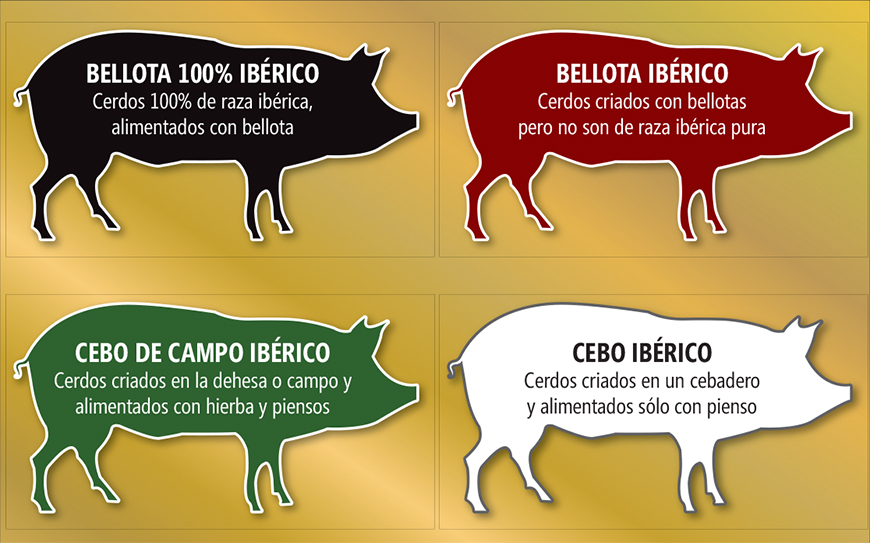
Each ham and each palette are labelled with a colour tag. Four different colours are distinguished:
- The black, for pigs 100% Iberian race that feed on acorns.
- Red, for pigs fed on acorns but they are not purebred Iberian
- Green, for pigs reared on the dehesa or in the countryside, fed with forage and cereal
- White, for pigs reared on farm and fed exclusively on forage and grain
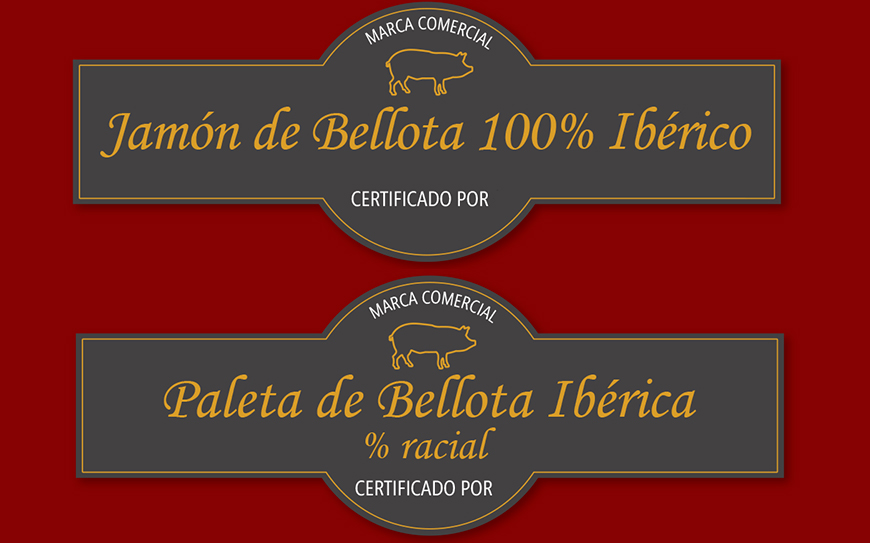
On the label located surrounding the leg, appears certain information as:
- The trade name
- The type of product: ham for ham and palette to the palette
- The percentage of Iberian breed of the specific animal which the product comes.
- The expression certified followed by the name or initials of the independent control agency.
Asici data on the evolution of the number of hams per Label between 2014 and 2020
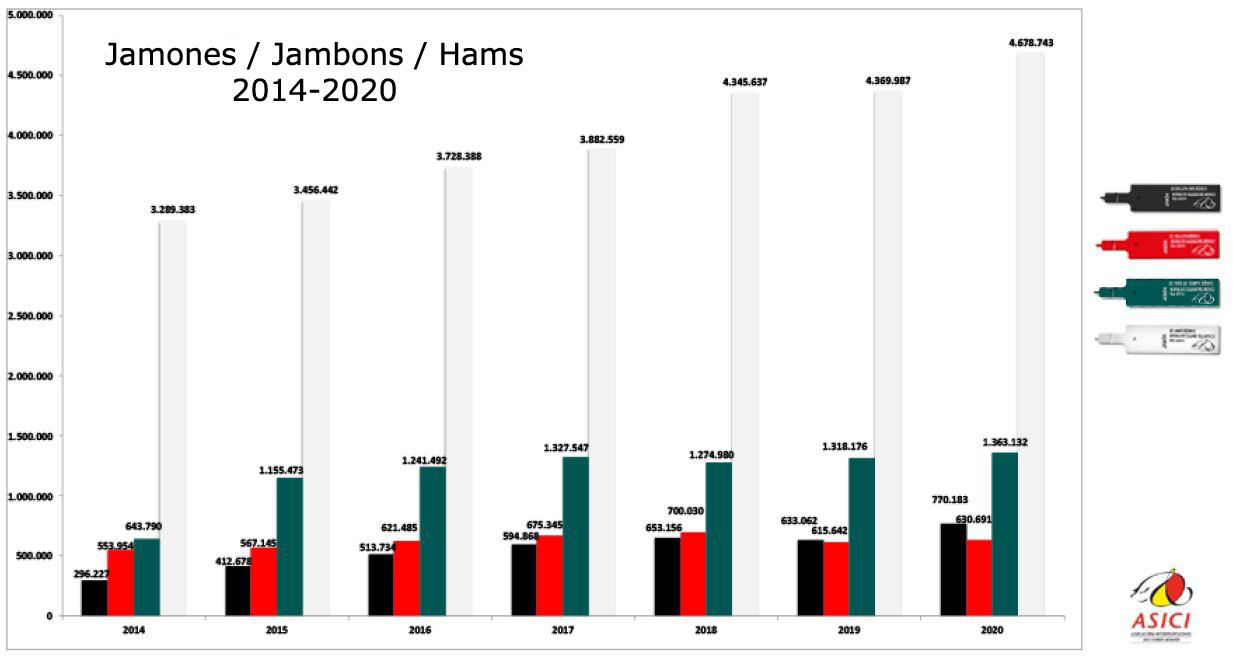
These new arrangements, which respond to the unanimous demand from industry organizations are designed to contribute to the maintenance of the Iberian breed and Dehesa ecosystem and facilitate the consumer access to information and improved transparency on the characteristics of the marketed product.
On spanish TV - 2014 "Los colores del jamón" about the spanish ham

Understanding Iberian ham categories
Since the introduction of Royal Decree 4/2014, Spanish regulations have clearly defined the production and marketing of Iberian ham. This reform was introduced to make product labels easier for consumers to understand and to better distinguish the different breeding systems used for Iberian pigs.
Before 2014, certain designations, such as Recebo, were sometimes used inconsistently and could be confusing. Today, every Iberian ham is classified according to two essential criteria: the pig's diet and its breed purity.
The three Iberian ham categories
| Category | Breeding and feeding |
|---|---|
| Bellota | Pigs raised free-range in the dehesas and fed mainly on acorns during the montanera season. |
| Cebo de Campo | Pigs raised outdoors or in semi-free-range conditions and fed with cereals, legumes and the natural resources available in their environment. |
| Cebo | Pigs raised on farms and fed mainly with cereal- and legume-based feed. |
What do 50%, 75% and 100% Iberian mean?
Contrary to a common misconception, these percentages do not indicate how many acorns the pigs have eaten. They refer exclusively to the breed purity of the Iberian pig.
| Label | Meaning |
|---|---|
| 100% Iberian | Both parents are purebred Iberian pigs registered in the official herd book. |
| 75% Iberian | The pig comes from a crossbreed while retaining a high proportion of Iberian genetics. |
| 50% Iberian | The pig generally comes from a purebred Iberian sow crossed with a Duroc boar. |
Breed purity alone does not determine the quality of a ham. Breeding conditions, feeding, aging time and the producer's expertise are equally important factors.
The official label colours
To make purchasing easier, Spanish regulations also introduced an official colour-coded label system:
- Black label: 100% Iberian Bellota.
- Red label: Bellota Iberian (50% or 75% Iberian).
- Green label: Cebo de Campo Iberian.
- White label: Cebo Iberian.
This colour system allows consumers to quickly identify the category of Iberian ham while ensuring compliance with Spanish quality regulations.