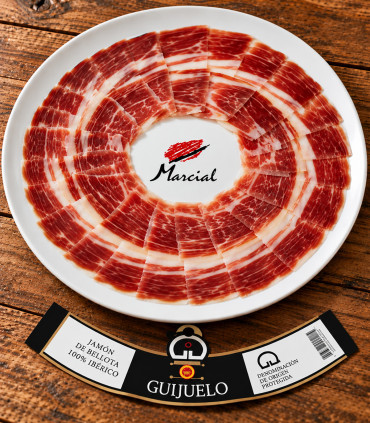
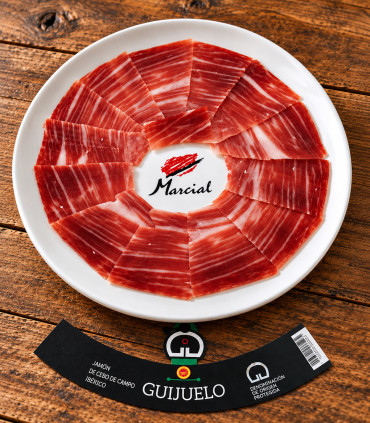
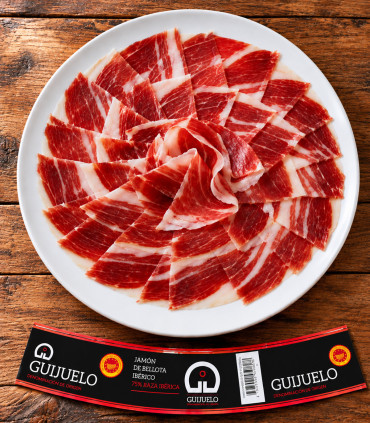
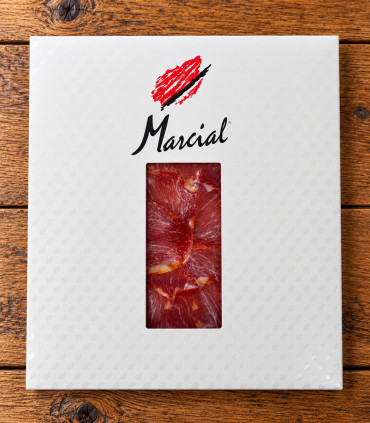
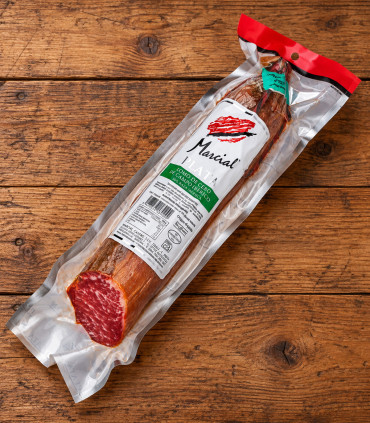
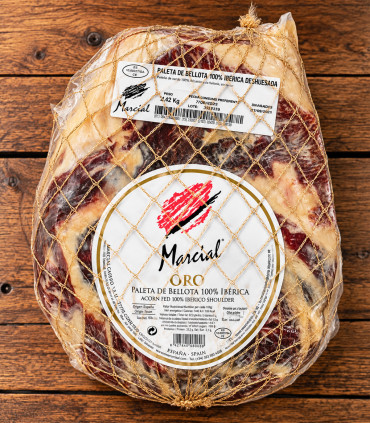
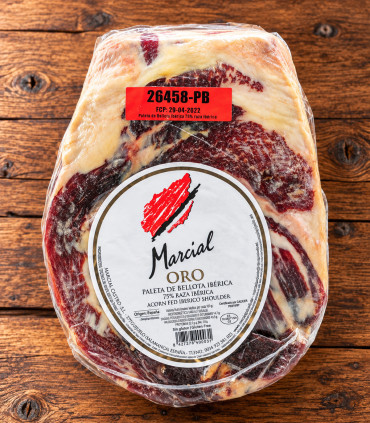
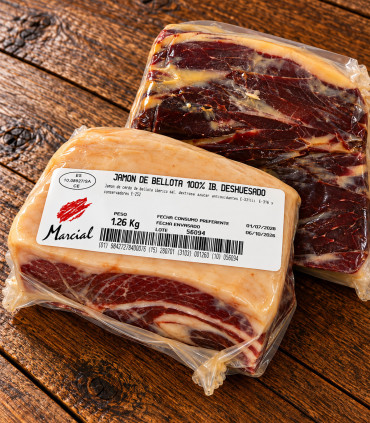
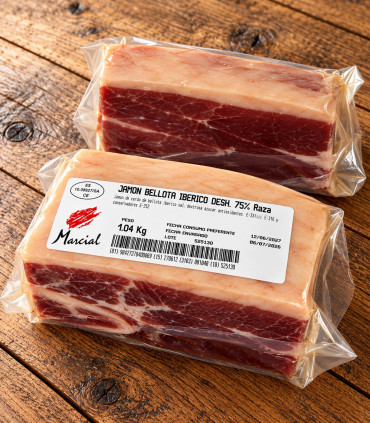
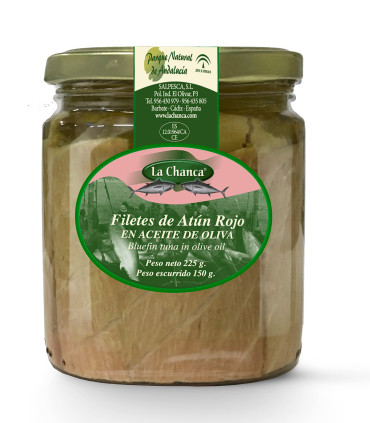
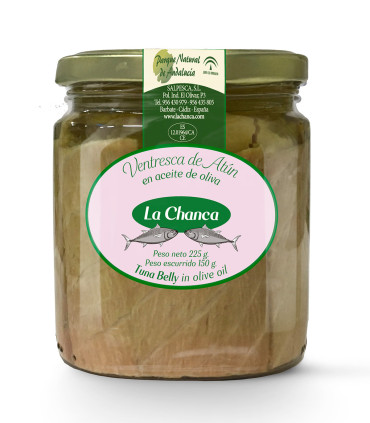
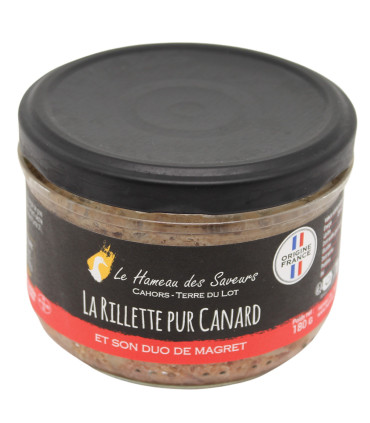
Carefully selected and tasted, all sausages & hams sold by TAPAS shop come directly from the best areas of production and rearing of Iberian pig named. Pata negra
Tyrosine crystals on Spanish ham

Don't confuse them with grains of salt
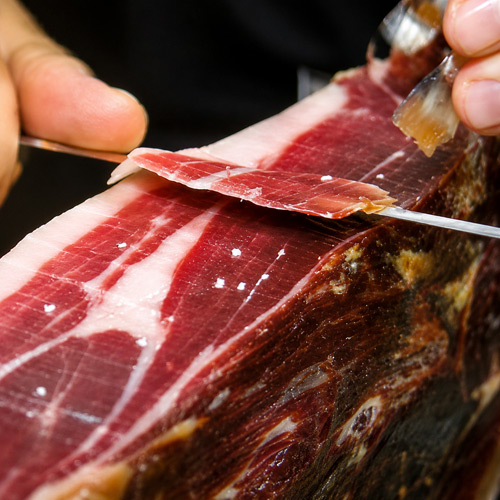
These small white spots that can sometimes be seen on ham are often mistaken for grains of salt. However, they are usually tyrosine crystals.
Tyrosine is one of the 20 amino acids that make up proteins, which are essential for life. It is a non-essential amino acid, as our body can produce it from another essential amino acid: phenylalanine, provided that our diet supplies enough of it.
Its name in English is Tyrosine, and its abbreviations are Tyr and Y.
Without going into too much technical detail, tyrosine has a particular structure that allows small crystals to form.
The word tyrosine comes from the Greek tyros, meaning “cheese”. It was given this name because this amino acid was discovered by the German chemist Justus von Liebig from casein, a protein found in cheese.
Most importantly, the presence of these small tyrosine crystals is not, by itself, a sign of quality. Rather, it is an indication of a slow, natural and traditional curing process. The crystals can form naturally during the dehydration of the ham. They can be found in both Ibérico and Serrano hams.
The quality of a ham, on the other hand, depends on every stage of its production and the care taken at each step. It is this expertise and craftsmanship that ultimately shines through in the product we enjoy.
Spanish charcuterie and iberian Ham
The Salting of Iberian Ham
From winter to autumn, what are the different stages in the salting of Iberian ham? With the rhythm of the seasons, each stage is controlled according to the weight of the hams, the weather, and the expertise of the curing masters.
>> Learn more
List of available products:
Tips for buying ham or cold cuts:
We sell Spanish cured meats produced in the regions of Jabugo, Los Pedroches, and Trevélez. These designations represent a mark of quality based on impeccable traceability and labeling, combined with traditional know-how. The ham produced there has been submitted for inclusion in the gastronomic heritage of humanity.
We work with small local producers who strive to prioritize quality above all, family businesses in which we place our full trust.
To better understand ham culture in Spain: read our article on PDO and PGI
Whether you are a simple enthusiast, a gourmet, a restaurant professional, a connoisseur or a gastronome... you love Spanish cured meats but don’t know what to choose between Serrano ham, Ibérico ham from bellota or cebo… whole, boneless, or sliced… you hesitate.
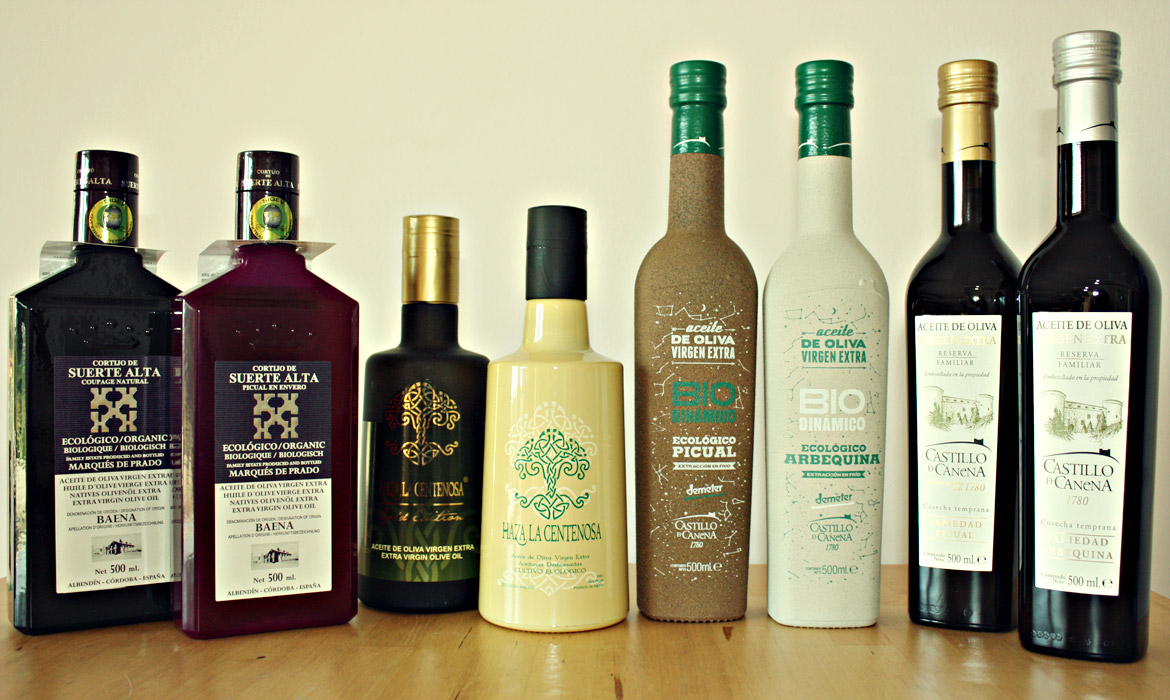
Spanish Extra Virgin Olive Oil: Pure Quality from the Source
- Out-of-Stock
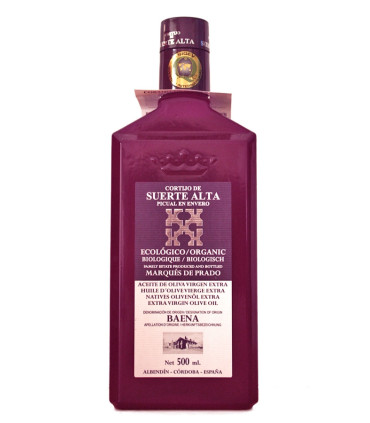
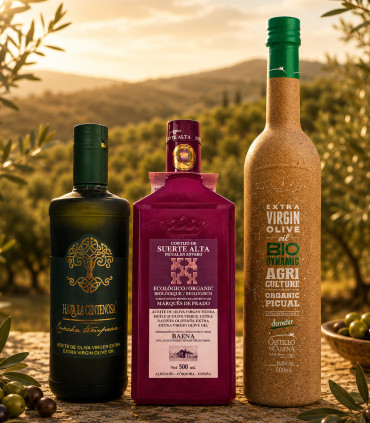
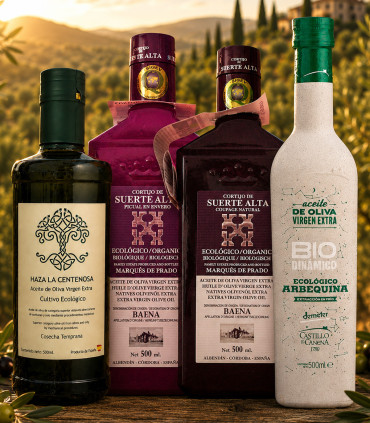
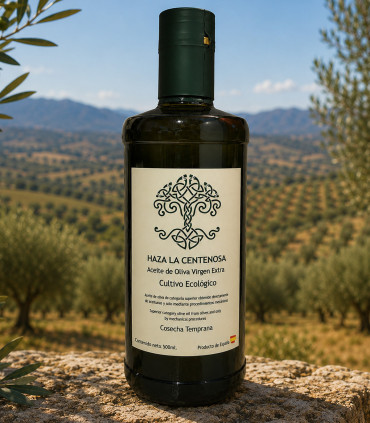
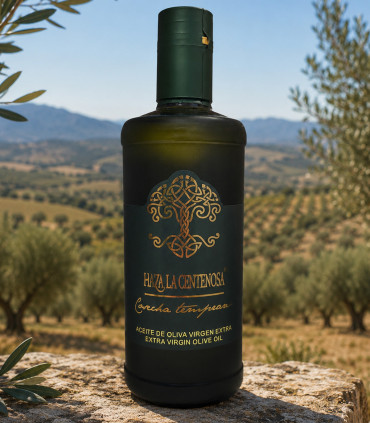
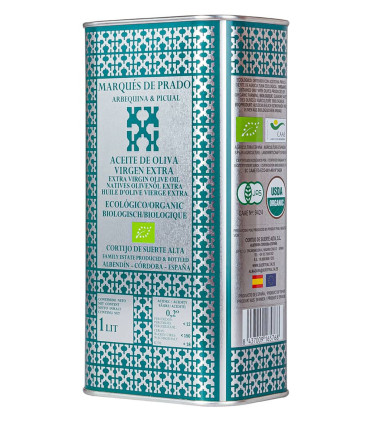
Discover our selection of Andalusian olive oils:
Produced in the south of Spain, the oils we have chosen all have a denomination of origin: Baena (Córdoba) and Sierra Mágina (Jaén) and have the AOVE label (for Aceite de Oliva Virgen Extra, HOVE in France), i.e. only from first cold pressing, after extraction by mechanical processes, without the use of chemical products. The quality can then vary according to criteria such as the time spent between harvesting and pressing (no more than 24 hours for those of our producers) or whether or not the olives that have already fallen to the ground are picked. Discover our AOVE oil selection

How can you recognise a high-quality olive oil?
fr
en
es