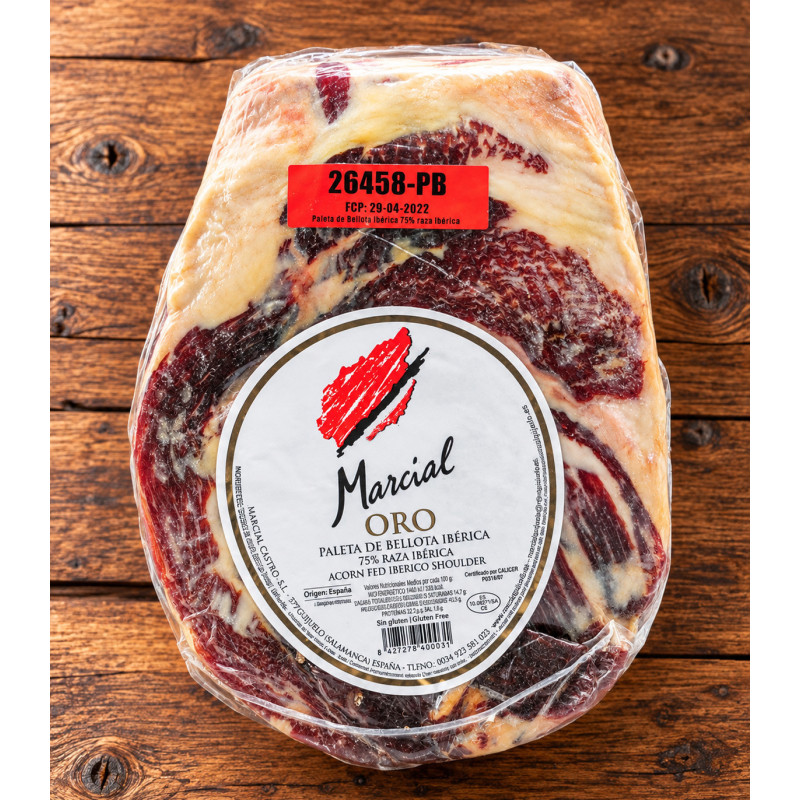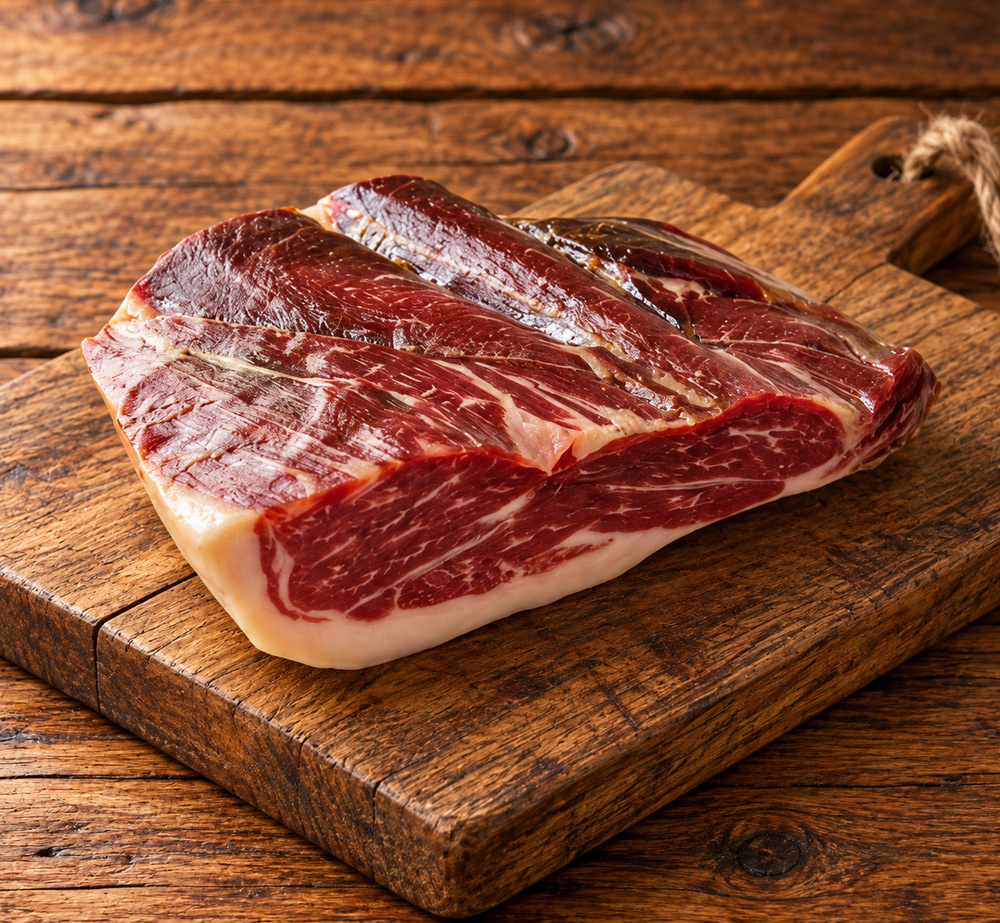
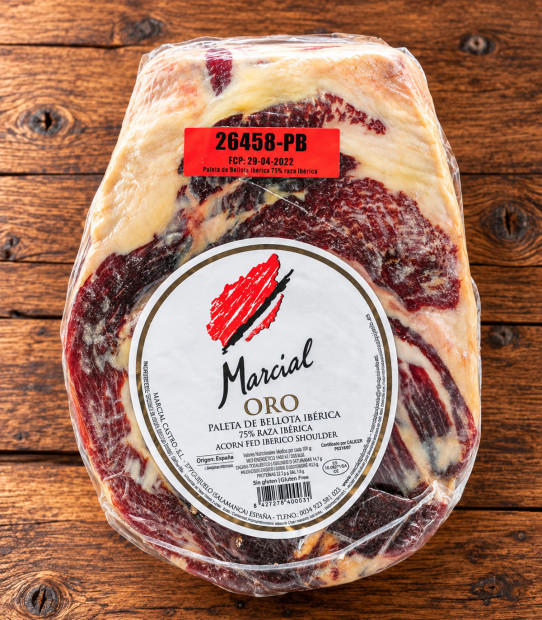
Boneless 75% Iberian paleta: a clean block, with no bone or rind, ready to carve.
75% Iberian Acorn-Fed Paleta: Class II of the Guijuelo PDO, ready to slice
Marcial Castro's 75% Iberian Acorn-Fed Paleta is the same piece as our whole 75% Iberian paleta. Only the presentation changes: once curing is complete, the bone is removed and the piece is trimmed, then vacuum-packed.
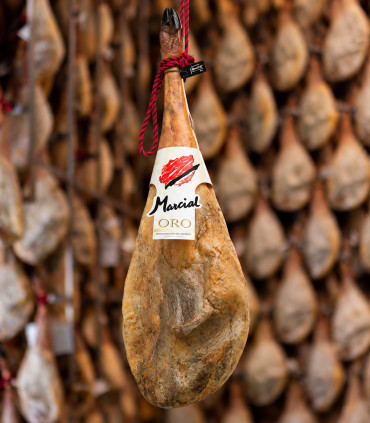
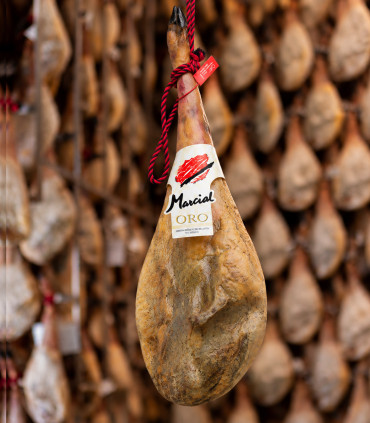
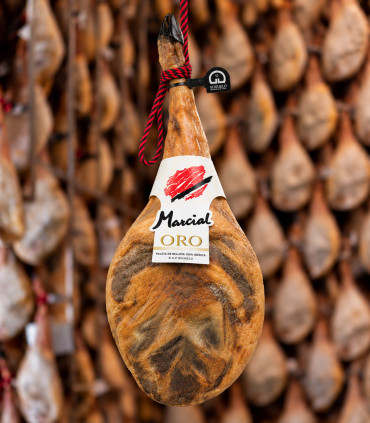
It belongs to Class II of the Guijuelo PDO, "Paleta de Bellota Ibérica". The pigs are 75% Iberian: a purebred Iberian mother and a father crossed from Iberian and Duroc. As with the 100%, they are fattened on acorns during the montanera. At Marcial Castro, every paleta is certified by the designation of origin; this one is boned after being produced and certified as a whole piece.
A boned and "pulida" paleta: no bone, no rind
In Spain, there are two ways of preparing a boneless piece. A simply deshuesada (boned) paleta keeps its rind and outer fat. A deshuesada pulida paleta, like Marcial's, goes further: the bone, the rind and the surface fat are all removed.
This hand trimming removes everything that would be set aside when carving anyway. The piece is then reshaped in its net and vacuum-packed. The result is a clean, even block where almost everything you buy is eaten.
This matters especially for a paleta. Its bone, the shoulder blade, is wide and complex in shape, which makes carving a whole piece tricky. Once boned, the paleta is as easy to slice as a block of ham.
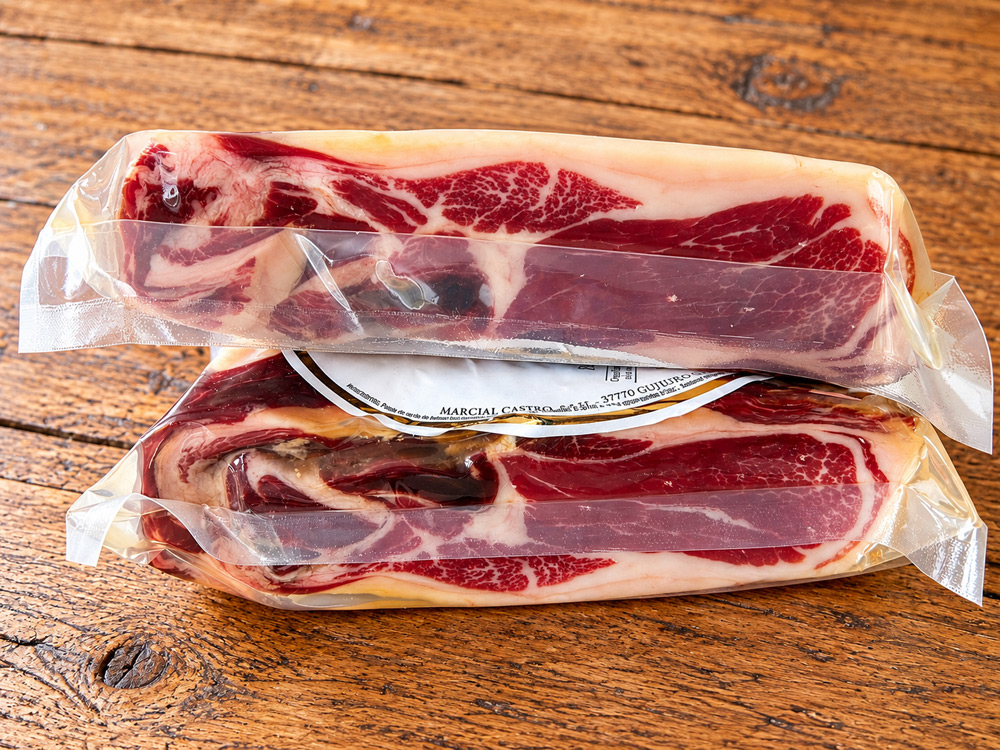
Two formats: whole or half piece
- Whole boneless paleta, 2 to 2.4 kg: for large gatherings, celebrations or regular eating;
- Boneless half piece, around 1.2 kg: easier to finish once opened, ideal for a household or to discover acorn-fed paleta.
Either way, no ham stand is needed: the piece can be sliced by knife or with a slicer, and fits easily in the fridge.
75% Iberian pigs raised in the dehesa
The pigs roam freely at El Encinar del Poniente, Marcial Castro's estate in Extremadura, a dehesa of holm oaks and cork oaks.
During the montanera, they feed on fallen acorns, grasses and the natural resources of the dehesa. The PDO specification requires more than 60 days of montanera and a minimum slaughter age of 14 months. This diet gives the fat its richness in monounsaturated fatty acids and its melt-in-the-mouth texture.
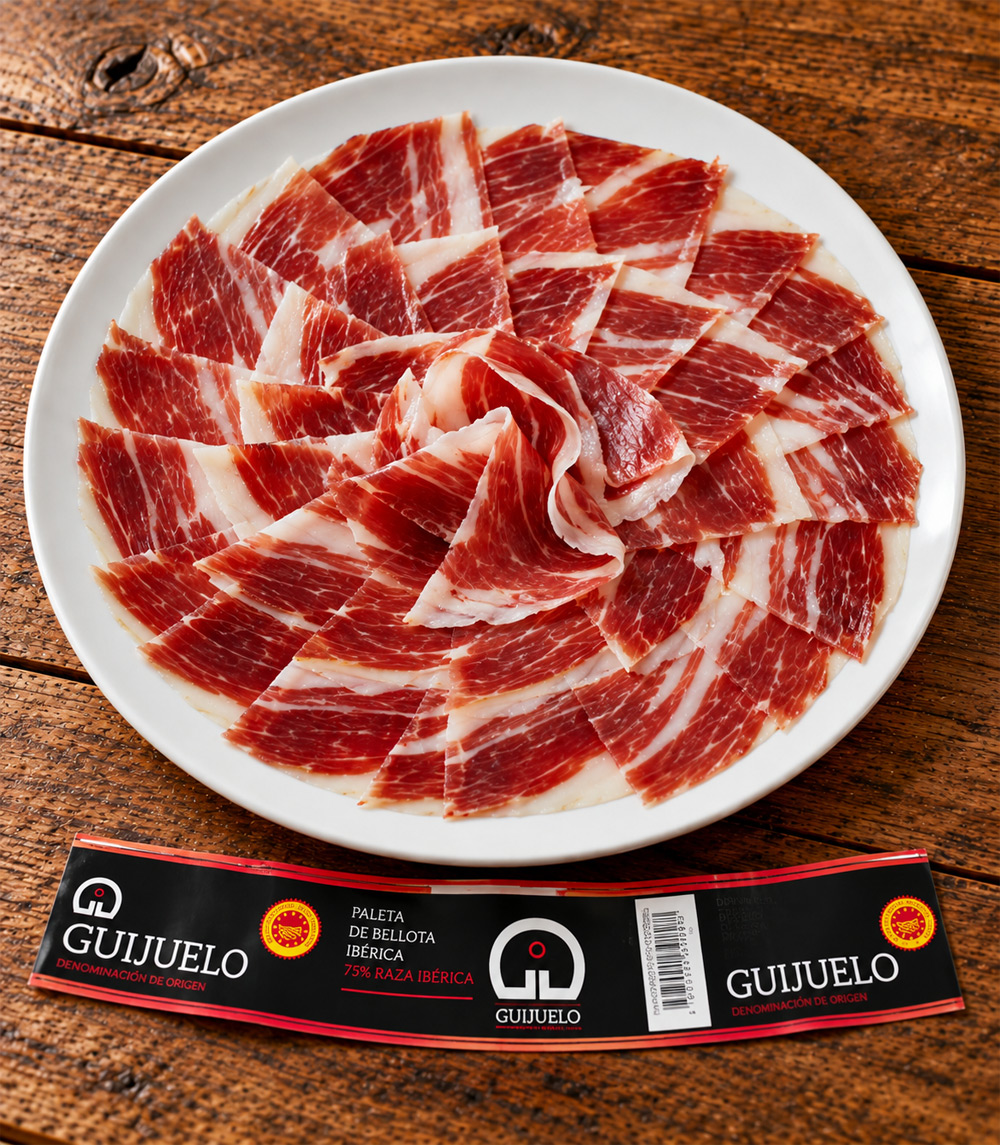
Hand-sliced 75% Iberian acorn-fed paleta – Marcial Castro, Guijuelo.
At least 600 days of curing in Guijuelo, Salamanca
After salting, the paleta dries slowly in Marcial Castro's natural drying rooms, then finishes maturing in the cellar. The Guijuelo PDO requires acorn-fed paleta to be cured for at least 600 days.
Guijuelo, at around 1,000 metres above sea level in the province of Salamanca, has long, cold, dry winters. This climate allows slow curing, which develops pink to purplish-red meat, glossy when cut, clearly visible marbling and intense aromas.
Boneless 75% Iberian Acorn-Fed Paleta: key facts
- Product: 75% Iberian Acorn-Fed Paleta, boned and trimmed (deshuesada pulida)
- Brand: Marcial Castro (Oro range)
- Origin: Guijuelo, Salamanca – Spain
- Designation: PDO Guijuelo, Class II
- Breed: 75% Iberian (purebred Iberian mother, Iberian × Duroc father)
- Diet: acorns, grasses and dehesa resources (montanera of more than 60 days)
- Farm: El Encinar del Poniente, Extremadura
- Curing: natural, in Guijuelo, minimum 600 days
- Ingredients: Iberian acorn-fed pork shoulder, sea salt
- Formats: whole boneless piece (2 to 2.4 kg) or boneless half piece (around 1.2 kg)
- Shelf life: around 1 year vacuum-packed; 1 to 2 months once opened
- Gluten-free
- Packaging: vacuum-packed
Paleta or ham: what's the difference?
The paleta comes from the shoulder, the pig's front leg, while ham comes from the hind leg. Being smaller, the paleta is cured for less time: at least 600 days, compared with 1,000 for acorn-fed ham.
On the plate, it gives smaller slices, often more marbling and a very intense flavour. It's an excellent way to discover acorn-fed Iberian pork at a more affordable price. If you prefer the hind leg, the boneless 75% Iberian acorn-fed ham block is also available.
75% or 100% Iberian: which to choose?
Both are acorn-fed paletas: the same acorn diet, the same montanera and the same minimum curing of 600 days. The difference lies in the pig's genetics.
The 75% Iberian, from a cross with Duroc, has slightly less fat and a rounder flavour, much appreciated for everyday enjoyment. The boneless 100% Iberian paleta, from purebred pigs, has more pronounced marbling and a longer finish.
How to slice the boneless paleta
Open the piece 30 minutes to 1 hour before serving: the fat should turn slightly translucent to release its aromas.
Cut very thin slices with a long, flexible knife, or with a slicer. When using a slicer, the piece cuts more cleanly when well chilled, straight from the fridge. Only slice what you are about to eat: slices cut in advance oxidise and lose their aromas.
It fits naturally on an Iberian charcuterie board.
A long shelf life, even once opened
Unopened and vacuum-packed, the boneless paleta keeps for around a year in a cool place: check the date on the packaging. So you can order it ahead for the holidays or keep one in reserve.
Once opened, it keeps for another 1 to 2 months. Cover the cut face with a few slices of fat or with cling film, then wrap the piece in a clean cotton cloth and store it somewhere cool or in the fridge. The cloth protects it from light and air while letting it breathe.
Marcial Castro: Guijuelo know-how
75% Iberian Acorn-Fed Paleta is made by Marcial Castro, a family business based in Guijuelo, in the province of Salamanca, that has specialised in Iberian pork products for more than a century.
Now in its fifth generation, the house controls the whole chain, from raising the pigs in the dehesa to curing and trimming the pieces in its Guijuelo workshops.
During our visit to Marcial Castro in Guijuelo, we were able to see first-hand the facilities and curing cellars where the house's hams and paletas are made.
 en
en
 fr
fr es
es

 Reviews